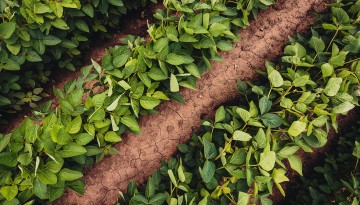
Specialists from Cornell Cooperative Extension are helping urban farmers from Buffalo to New York City make the most of confined spaces and unique growing conditions.
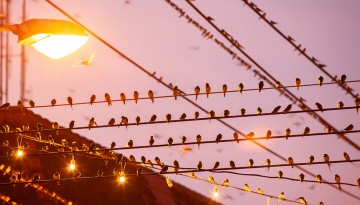
An estimated 600 million birds die from building collisions every year in the U.S., and research from the Cornell Lab of Ornithology offers one explanation for it: a combination of light pollution and geography.
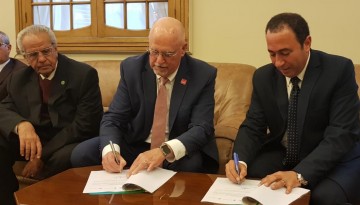
The U.S. Agency for International Development has launched a five-year, $30 million project between Cornell and Cairo University to create a Center of Excellence in Agriculture in Egypt.
Graduate student Teddy Yesudasan’s presentation, “What Makes a Red Potato Red?” earned him first place and $1,500 in the fifth annual Three Minute Thesis contest, March 20 in Call Auditorium.
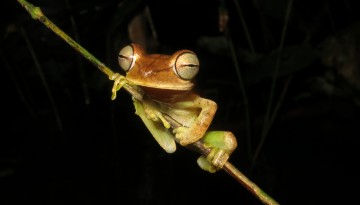
A fungal disease that afflicts amphibians has led to the greatest loss of biodiversity ever recorded due to a disease, according to a paper published in Science.
Ascribe Bioscience has become the first company based on technology developed at the Boyce Thompson Institute to receive a National Science Foundation Small Business Innovation Research grant.
A research team led by David Russell from the College of Veterinary Medicine has pinpointed a novel angle of attack that could eradicate HIV reservoir cells – while leaving healthy cells untouched.
A new class of biomaterial developed by Cornell researchers for an infectious disease nanovaccine effectively boosted immunity in mice with metabolic disorders linked to gut bacteria – a population that shows resistance to traditional flu and polio vaccine.
A team from Cornell has partnered with Alfred State College and the National Agency for Science and Engineering Infrastructure in Nigeria to help bring solar power to that African nation.