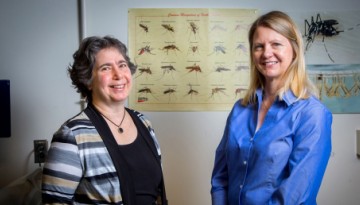
Cornell researchers are exploring a new approach to reducing the spread of mosquito-borne viruses through seminal fluid proteins from male mosquitoes that disrupt the reproductive biology in females.
Maddie's Shelter Medicine Program at Cornell's College of Veterinary Medicine has launched a pilot program to provide diagnostic services for animal shelters.
Peter Sullivan, a fifth-year doctoral student, is the winner of this year's Harry and Samuel Mann Outstanding Graduate Student Award for his research on ALS and FTLD.
A new study shows how milkweed toxins affect the web of creatures that surround the predatory aphids, especially ants, which frequently serve as aphid protectors.
A new study of mosses brings scientists one step closer to solving a mystery in plant biology: how plants made the transition from water to land 450 million years ago.
The College of Agriculture and Life Sciences announced March 8 an agreement with SUNY Broome Community College that lets students complete a degree in Cornell’s Department of Food Science.
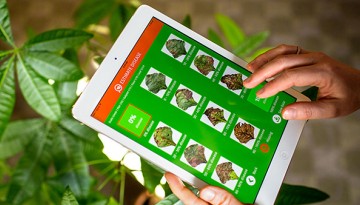
A new iPad app, called Estimate, connects plant professionals with a portable database of photographs of diseased leaves to help determine plant disease severity.
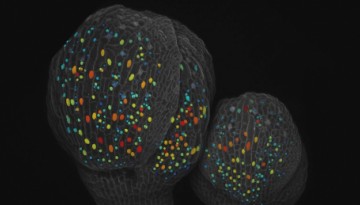
New research identified for the first time a random patterning mechanism that decides the size of cells found in the sepals – the leaf-like covering of petals in a bud – of flowering plants.
A new multidisciplinary collaborative research graduate degree program at Cornell will combine architectural research with study in material computation, adaptive architecture and digital fabrication.