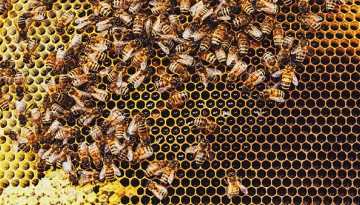
A team led by Cornell researchers has received a five-year, $2.2 million National Institutes of Health grant to better understand how pathogens that infect bees and other pollinators are spread.
For the first time, Cornell researchers report they have identified biological markers of chronic fatigue syndrome in gut bacteria and inflammatory microbial agents in the blood.
Fungi that live in a healthy gut may be as important for good health as beneficial intestinal bacteria, according to new research conducted at Weill Cornell Medicine.
A naturally produced chemical exacerbates infection by a common bacteria, rendering the infection significantly harder for the body to clear, according to new Cornell cross-campus research.
Spanning six continents, 32 countries and 54 cities, more than 12,000 samples of DNA, RNA and microbes from surfaces in subways, buses, airports and other well-traveled public meeting spaces were collected June 21.
The National Institutes of Health's National Institute of Biomedical Imaging and Bioengineering has awarded Cornell a four-year, $2.3 million grant to develop FeverPhone, which will diagnose six febrile diseases in the field.
Starting in the fall 2017 semester, Cornell University will offer a Master of Public Health degree with a focus on epidemiology, infectious disease, food systems and sustainability.
In the Liberty Hyde Bailey Lecture, held June 10 as part of Reunion Weekend at Call Auditorium, faculty members Greg Martin, Jim Giovannoni and Susan McCouch, Ph.D. ’90 celebrated their mentor, Cornell Professor Emeritus Steve Tanksley.