Three young Cornell researchers have won National Institutes of Health New Innovator Awards. The awards provide up to $1.5 million over five years for innovative, high-impact projects.
Neuroscientist Valerie Reyna has been named a member of the National Academy of Medicine for distinguished contributions to medicine and health. Her work integrates brain and behavioral research.
On Oct. 6 President Elizabeth Garrett visited the university's New York Agricultural Experiment Station in Geneva, where she lauded its work and contributions to New York state's economy.
From Buffalo to Long Island, the North Country to the Southern Tier, Cornell undergraduates – serving as interns – spent their summer enhancing life in New York.
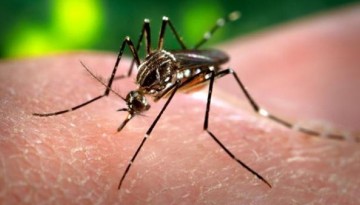
Cornell researchers have used mathematical models to illuminate the promises – and potential problems – of a new genome editing mechanism, called a gene drive.
A graduate student and two undergraduates spent the summer studying zooplankton species in Adirondack lakes to learn to determine whether they can live in different environments.
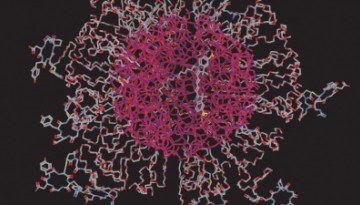
Cornell University, in partnership with Memorial Sloan Kettering Cancer Center, is opening a new $10 million MSKCC-Cornell Center for Translation of Cancer Nanomedicines. The center is based on development of nanoparticles called C dots.
A new Boyce Thompson Institute study appearing Sept. 23 in the journal Molecular Medicine details how salicylic acid in aspirin blocks the inflammatory protein HMGB1, which may lead to new treatments.
George Paul Hess, professor emeritus of biochemistry and a pioneer in the study of a class of proteins called ion channels that allow specific small molecules to enter cells, died Sept. 9.