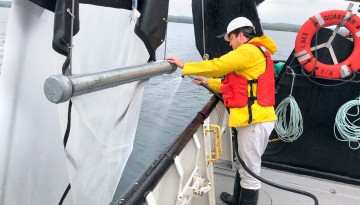
Cornell received the grant to continue efforts to monitor and research the lower part of the food web, particularly zooplankton like Mysis and benthic invertebrates.
Students aim to reduce aviation emissions, support farmworkers and improve a New York animal shelter with the David M. Einhorn Center for Community Engagement’s Serve in Place awards.
The Well-being and Mental Health Fund will offset costs associated with curricular adjustments already underway and programmatic efforts at the College of Veterinary Medicine.
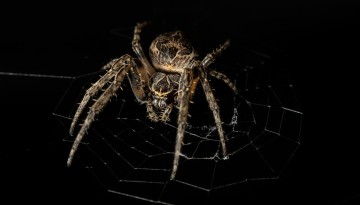
A study of orb weaver spiders finds their massive webs act as auditory arrays that capture sounds, possibly giving spiders advanced warning of incoming prey or predators.
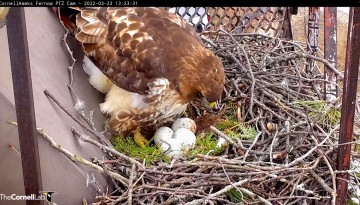
For the first time since the Lab of Ornithology installed a live camera on the nest in 2012, Big Red, the female red-tailed hawk, has produced a fourth egg during breeding season.
A Boyce Thompson Institute scientist has developed an app that integrates multiple data analysis features into a single, easy-to-use tool for the metabolomics community.
An exhibit at the Paleontological Research Institution’s Museum of the Earth in Ithaca – created in collaboration with Cornell entomologists – offers a fascinating education in the diversity of insects and their importance to life on Earth.
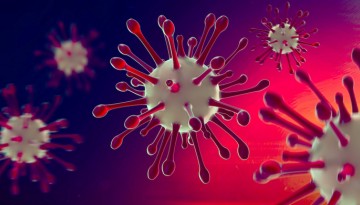
A newly discovered small molecule could be sprayed into people’s noses to prevent COVID-19 illness prior to exposure and provide early treatment if administered soon after infection, according to a study in mice led by Cornell researchers.
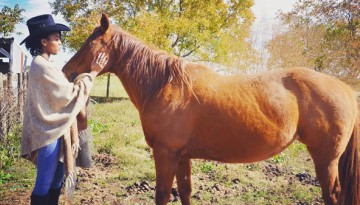
Weaving eastern and western veterinary medicine approaches in her private practice while also building a vibrant brand and media presence, Aziza Glass, D.V.M. ’15, has crafted a unique and rewarding career niche for herself.