Assistant professor Dr. Jacquelyn Evans is the first faculty member supported by the new Cornell Margaret and Richard Riney Canine Health Center, where her research on canine genetics will play a key role in helping dogs live longer, healthier, happier lives.
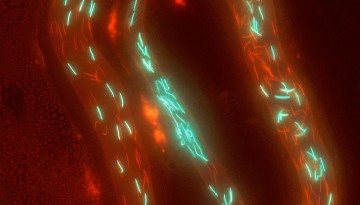
Long considered exclusively male, a new study revealed that by four days after a sperm enters a female fruit fly, close to 20% of its proteins are female-derived.
By the end of this century, Cornell’s Flavio Lehner and others said that megadroughts – extended drought events that can last two decades – will be more severe and longer in the western U.S. than they are today.
Artificial Intelligence, Design + Technology and Quantum Science and Technology will become part of “Radical Collaboration Drives Discovery,” bringing to 10 the number of initiatives in the provost office’s five-year-old program.
Researchers at the College of Veterinary Medicine plan to develop an enzyme-based technology into a range of diagnostic tests that can be performed anywhere using a handheld device.
North American white-tailed deer – shown in 2021 surveys of five states to have SARS-CoV-2 infection rates of up to 40% – shed and transmit the virus for up to five days once infected, according to a new study.
Dr. Dwight Bowman was recognized for his outstanding achievements in the field of parasitology and for his vast contributions to veterinary research and education.
Referring to police using the legal phrase “objectively reasonable” puts the officer in a more favorable light, regardless of race, according to new research from Neil Lewis Jr. ’13, assistant professor of communication, and doctoral student Mikaela Spruill.