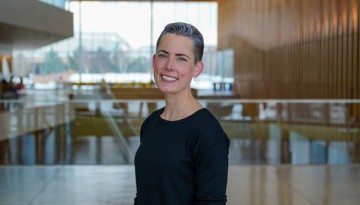
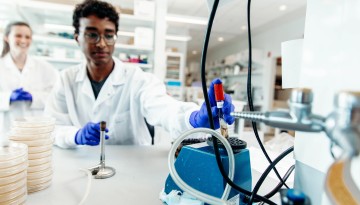
Cornell's Office of Academic Integration has announced 15 new multi-investigator seed grants, including support for a project on climate change, pollen and asthma attacks and another to develop a microbial delivery system for a unique treatment of colorectal cancer.
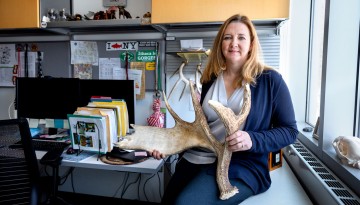
A new study from Cornell University finds that fish are far more likely to communicate with sound than previously thought — and some fish have been doing this for at least 155 million years.
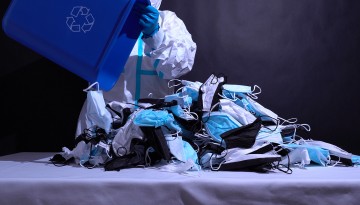
Forget incineration or landfills. To resolve the increasing, never-ending waste stream of medical PPE as a result of the pandemic, Cornell engineers suggest recycling via pyrolysis.
Seven Cornell faculty members have been elected fellows of the American Association for the Advancement of Science, the world’s largest general scientific society. This year's fellows, 564 in all, will be honored at a virtual event Feb. 19.
Two National Science Foundation grants totaling more than $1.2 million will fund projects to test a novel strategy to make milk production more efficient and sustainable and outreach to communicate animal science to the public.
Chobani has announced changes to its successful Chobani Scholars Program, adding a pledge of $1 million and a focus on supporting historically underserved students who wish to pursue a broad set of agricultural interests.
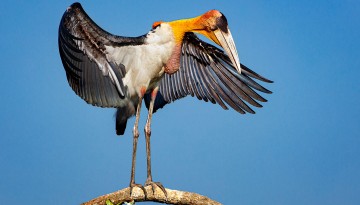
A new film, “Hargila,” illustrates how the greater adjutant stork is slowly being pulled back from the brink of extinction thanks to a community effort inspired by a wildlife biologist in India.