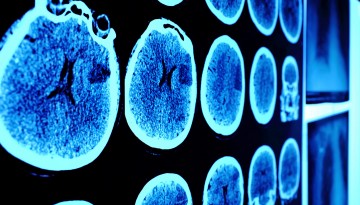
A $5.1 million research project just launched at Cornell University, the University of Washington, and the University of Arizona that may offer some hope by investigating the potential links between Alzheimer’s disease and a similar condition in dogs called canine cognitive dysfunction.
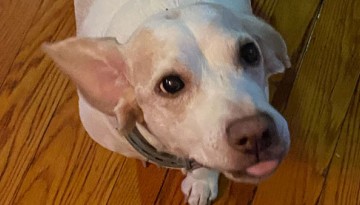
Teddy was diagnosed with the most common type of cancer for dogs: Lymphoma, a blood cancer that starts in the lymph nodes and can infiltrate any organ in the body, including the eyes.
Cornell BrAIn, initiated and led by the College of Arts & Sciences, will host a two-day symposium Dec. 9-10, bringing together innovators in Artificial Intelligence (AI) and neuroscience.
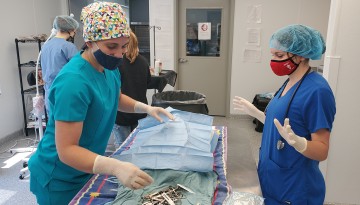
FARVets, a nonprofit run through the College of Veterinary Medicine to address animal overpopulation with spay-neuter clinics and vaccinations, has extended its reach in New York state as it has had to limit international programming because of the COVID-19 pandemic.
A Cornell program is playing a key role in a project to make rice more resilient to climate change and increase production in West Africa, thanks to a four-year, $14 million grant from the Adaptation Fund.
New research from the Cornell College of Veterinary Medicine has revealed how humans evolved greater resistance against anthrax multiple times during history: when they developed a diet of more ruminants, and when agricultural practices took hold.
A new ant species recently discovered in New Mexico has been named Strumigenys moreauviae, after Cornell University College of Agriculture and Life Sciences faculty member Corrie Moreau.
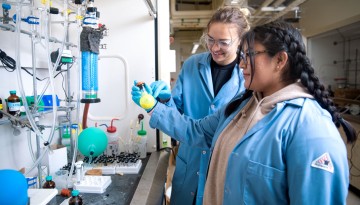
Forty-four graduate students have been selected as new National Science Foundation Graduate Research Fellowship Program (NSF GRFP) fellows, joining Cornell’s community of nearly 200 NSF GRFP fellows currently on campus.