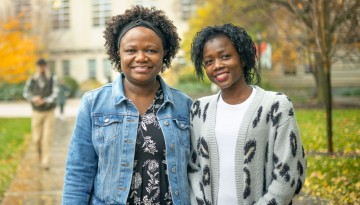
The Cornell Assistantship for Horticulture in Africa, a program that brings master’s students from sub-Saharan Africa to Cornell to complete doctorate degrees in horticulture, has now added a second assistantship for African Americans.
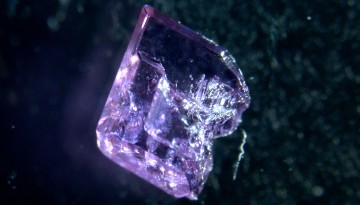
An engineered bacteria may solve challenges of extracting rare earth elements from ore, which are vital for modern life but refining them is costly, environmentally harmful and mostly occurs abroad.
Zinc deficiency is prevalent around the world, and among children, these mineral shortfalls can lead to stunting, embryonic malformations and neurobehavioral abnormalities.
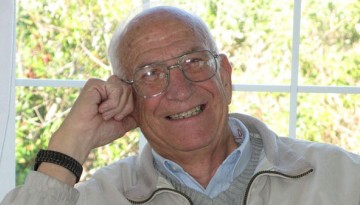
At Cornell, Robert Kahrs ’52, D.V.M. ’54, M.S. ’63, Ph.D. ’65, served as associate dean and director of veterinary admissions, and was dean of the University of Missouri College of Veterinary Medicine from 1982-1992.
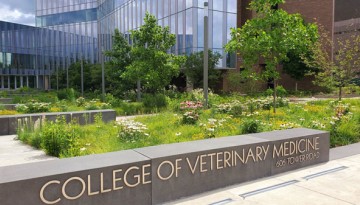
In recognition of their leadership and impact in the field of large animal surgery, Drs. Susan Fubini and Norm Ducharme have been honored by the American College of Veterinary Surgeons.
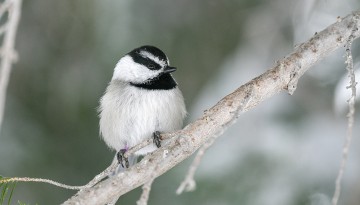
For the first time, researchers have shown that there is a genetic component underlying the amazing spatial memories of mountain chickadees, which hide thousands of food items every fall and rely on these hidden stores to get through harsh winters.
Indy, a puggle-Boston terrier mix, has been treated with different chemotherapies five times and gone into remission each time at the College for Veterinary Medicine.
The CCAT-prime telescope project – being developed by an international consortium of universities, led by Cornell – has been awarded $1.3 million by the National Science Foundation.
The new findings published in Science capture never-before-recorded stages of a molecular construction process, with implications for future pharmaceutical development.