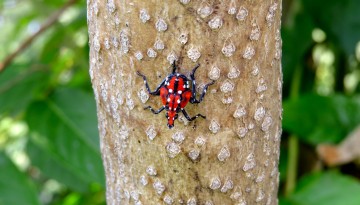
Thanks to grant funding from the USDA, the New York State Integrated Pest Management program is developing new virtual courses to help schools implement plans to manage pests such as rodents, head lice, bed bugs or yellow jackets.
The collaborative nature of innovation was one of the key messages author Steven Johnson delivered during a campus visit Sept. 22, as a guest of the Milstein Program in Technology & Humanity.
Cornell is one of only seven institutions across the U.S. that will receive a funding award from the National Institutes of Health through a program aimed at increasing minority faculty in the biomedical sciences.
From quantifying climate vulnerability in Haiti to documenting the ecological calendars of Indigenous and rural communities, Cornell student projects aim to reduce climate impacts around the world.
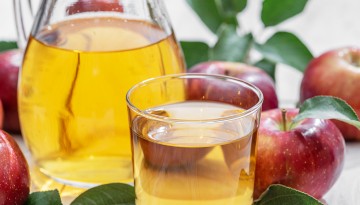
Apple juice lovers won’t be left with a bad taste, thanks to a new study that identifies three new bacteria species, one of which fouls up the flavor of the popular drink.
Around 80% of bird species examined in a new study were reported in greater numbers in human-altered habitats during pandemic lockdowns, according to new research based on data from the eBird program at the Cornell Lab of Ornithology.
Despite the pandemic, Cornell students successfully navigated the process of applying to medical and law schools and are headed to some of the country’s top professional schools this fall.
Paula Cohen, associate vice provost for life sciences, is leading an eight-year, $8 million, multi-institution grant to untangle the complex genetic rulebook for how sperm develops.