Galaxie, a 5-year-old black Lab diagnosed with B-cell lymphoma in 2018, is doing well after a rare bone marrow transplant, thanks in part to the care he’s received at the Cornell University Hospital for Animals.
A Baker Institute for Animal Health study finds the antimicrobial properties of certain stem cell proteins could help treat skin infections that are resistant to antibiotics.
Over a million hours of sound recordings are available from the Elephant Listening Project (ELP) in the K. Lisa Yang Center for Conservation Bioacoustics at the Cornell Lab of Ornithology – a rainforest residing in the cloud.
Dr. Norman Sharpless, director of the National Cancer Institute at the NIH, will give this semester’s Distinguished Lecture in Cancer Biology Sept. 24 from noon-1 p.m.
The new Center for Research on Programmable Plant Systems, or CROPPS, funded by a five-year, $25 million National Science Foundation grant, aims to grow a new field called digital biology.
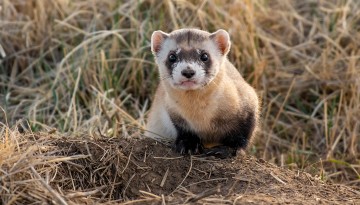
By testing easier-to-study coyotes, researchers from the Cornell Wildlife Health Lab at the College of Veterinary Medicine, in collaboration with the Cheyenne River Sioux tribe, have identified a range of lethal diseases threatening black-footed ferrets – one of the most endangered animals in North America.
Diagnostic tests are key to uncovering if it’s a virus making a pet lethargic, for example, or confirming that a tick found on the family dog carries the bacterium that causes Lyme disease — but should not be the only way to diagnose a case.
Neighborhoods that had populations with predominantly longer commute times to work – from about 40 minutes to an hour – were more likely to become infectious disease hotspots, according to new research.
The neurology service at the Cornell University Hospital for Animals helped Tanner and Gidgie, dogs from the same family that both suffered from painful spinal issues.