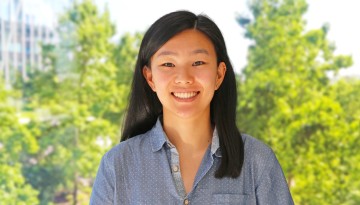
Tianyi Chen is pushing the boundaries of artificial intelligence by asking a pressing question: What if AI could be engineered not just to optimize for a single outcome, but to make smarter, more balanced decisions — much like humans do?
High schoolers from Ithaca and Brooklyn produced the artworks depicting Morrison and a local student, a collaboration that promises to introduce Morrison's work to new generations of New Yorkers.
Increased risk for anxiety may begin before birth, shaped by infection or stressful events during pregnancy, according to a new study from researchers at Weill Cornell Medicine.
Patients taking an experimental oral GLP-1 drug lost significant weight and improved heart and metabolic risk factors in a large, international phase III clinical trial.
The health care industry is increasingly relying on AI – in responding to patient queries, for example – and a new Cornell study shows how decision-makers can use real-world data to build sustainability into new systems.
A new innovation from Cornell researchers lowers the energy use needed to power artificial intelligence – a step toward shrinking the carbon footprints of data centers and AI infrastructure.
Cornell will send its largest-ever delegation to Climate Week NYC 2025, to present on issues including the renewable energy transition, protecting public health from heat waves and addressing the impact of climate change on housing.
In his new book, Cornell professor and historian Thomas J. Campanella shines a light on a pair of alumni from a century ago who helped create some of New York City’s most recognizable sights but have been largely overlooked.
As generative AI reshapes how we communicate, work, and make decisions, Angelina Wang is making sure these systems serve everyone — not just a privileged few.