A new grant awarded to Cornell University Press by the National Endowment for the Humanities will support open-access scholarly publication and help offset the impact of COVID-19 on nonprofit university press publishing.
The university launched its COVID-19 testing program for students July 16 as part of a multipronged public health effort. The initial focus is “arrival testing,” in which students are tested upon their return to the Ithaca area.
A $2.5 million grant from The Andrew W. Mellon Foundation is boosting a multi-institution initiative, which includes Cornell University Library, to develop ways to improve the sharing of catalog data among libraries.
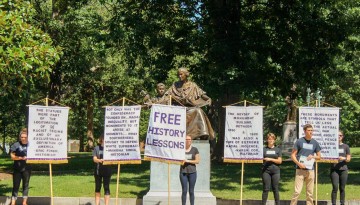
In “Racism and the Future of Memorials,” a July 13 webinar, architects and scholars discussed Confederate monuments, transitional justice memorials and the remnants of black heritage in Harlem.
What can faculty, students and community members be doing in response to institutional racism and its role in shaping health equity? A webinar organized by the Cornell Center for Health Equity will examine this question.
The Roper Center for Public Opinion Research at Cornell has identified and made available more than 80 years of public opinion surveys of Black Americans and U.S. public views of Black America.
A new podcast on “Unsettled Monuments, Unsettling Heritage,” launched in the spring, showcases the work of the Public Life fellowship group, part of the humanities-focused Radical Collaboration initiative.
Jay and Julie Carter, both Cornell Class of 1971, wanted to help make Cornell Outdoor Education courses more accessible. They established the David Moriah Endowment, named for their friend and founder of COE David Moriah ’72.