Cornell President Martha E. Pollack and Provost Michael I. Kotlikoff are playing a vital role in helping New York state plan for reopening safely as the COVID-19 pandemic eases.
During this time of social distancing and university life interrupted by the ongoing coronavirus (COVID-19) outbreak, the Chronicle offers a variety of opportunities to engage with online Cornell resources and programming.
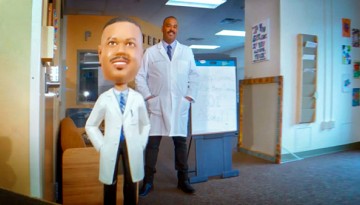
Dr. John Clarke, director of occupational medicine at Cornell Health, writes, produces and performs rap music on health-related topics, most recently coronavirus.
In addition to its natural splendor, Cornell Botanic Gardens now boasts an outdoor art installation: a two-story mural, created in September 2019 by Brazilian street artist Eder Muniz.
Miguel Gómez, an expert on food markets and supply chains, says food supply chains must become more flexible so that goods can be more easily directed to either supermarkets or food service establishments, wherever the need is greatest.
Alexander Colvin, Ph.D. ’99, an employment and labor expert, says businesses affected by the pandemic will weather the economic storm more successfully if they collaborate with their workforces.
Ian Kysel, visiting assistant clinical professor of law, helped draft principles for protecting migrants and refugees during the pandemic that have been endorsed by more than 800 scholars.
Rachel Beatty Riedl, an expert in international studies, says Africa is the first place to look for an effective response to the COVID-19 pandemic, given Africa’s success in dealing with the Ebola virus.