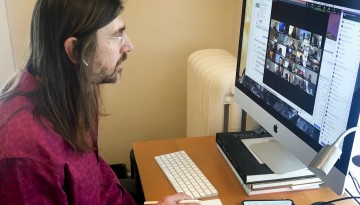
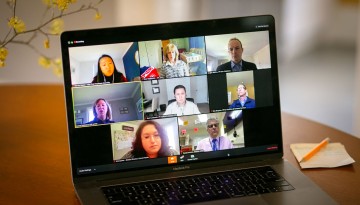
On the first day of virtual teaching for the Ithaca campus, Cornell instructors led 6,600 Zoom meetings with a total of 89,000 participants. Three weeks of coordinated planning and support led to a smooth start for all-online instruction.
Virtual events and online Cornell resources include a special organ performance, and workshops on workplace health and safety, continuing community-engaged projects and new immigration policy changes.
A project led by Janis Whitlock, research scientist in the Bronfenbrenner Center for Translational Research, provides a space for people around the world to share stories about life in the age of COVID-19, snapshots that will help researchers understand how people coped during the pandemic.
In a message to the Cornell community, President Martha E. Pollack detailed four principles university leaders will use to guide decisions made in the wake of the COVID-19 pandemic.
Faculty, students and staff at Cornell Law School are responding to the coronavirus pandemic by giving businesses and workers in central New York legal assistance.
Transdiagnostic processes, which are subtle ways that people think, act and cope, help explain why mental health problems become more common in girls as they reach puberty, according to new Cornell research.
The coronavirus pandemic has challenged Cornell students, as they’ve waited for online instruction to begin April 6. But many are responding with resilience, staying sharp and taking care of others, and themselves.
In a virtual forum sponsored by the Employee Assembly, university leaders said recent steps to contain costs sought to preserve jobs while addressing shortfalls prompted by the COVID-19 pandemic.
As Cornell University Library’s physical spaces remain temporarily closed to mitigate the spread of COVID-19, librarians are opening digital doors for Cornell’s community of scholars.