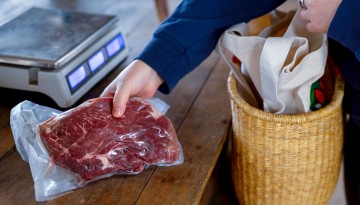
Cornell researchers partnered with 10 New York state livestock farmers using devices that record sales and process credit card payments and analyzed market transactions to better understand customer behavior and help farmers increase their profits at farmers markets.
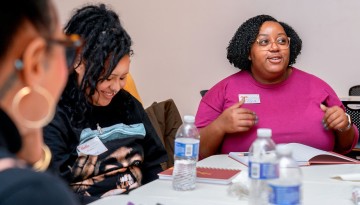
A new working group, co-founded by Cornell faculty, invites a community of Black scholars, educators and activists to reflect on their girlhoods – all in order to better serve the Black girls with whom they work.
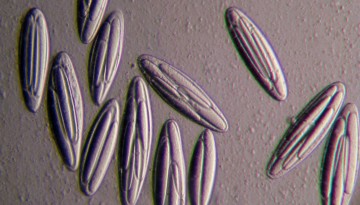
Cornell researchers and colleagues have for the first time described the near-complete genome of a rare bacterium so large it’s visible to the naked eye. The bacteria, which they’ve named Epulopiscium viviparus, lives symbiotically within some tropical marine surgeonfish.
Jessica Hong ’20, Henley Schulz ’22 and Andrew Talone ’24 are members of the 2024-25 cohort of Schwarzman Scholars, an international program that nurtures a network of future global leaders.
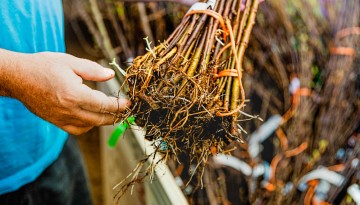
An estimated 70 million trees are planted on Cornell AgriTech's Geneva rootstocks around the world – and that number is likely to grow with the release of three new rootstocks.
On Dec. 12, Jamila Michener offered expert testimony during a New York State Senate committee hearing focused on the causes and effects of poverty in the state’s small and midsized cities.
When Dead & Company came to Cornell in May for a benefit concert commemorating the Grateful Dead’s famed “Cornell ’77” show, it drew thousands to Barton Hall. The March announcement of the show was the most-viewed Chronicle story of 2023.
USDA Deputy Secretary Xochitl Torres Small visited Cornell AgriTech Friday, Dec. 8 as one of her visits to land-grant institutions focusing on specialty crops, ag tech innovation and local foods.