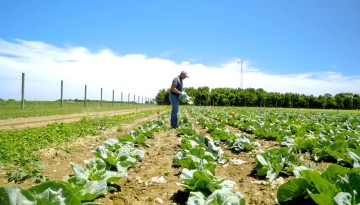
The Long Island Horticultural Research and Extension Center on Sept. 22 will celebrate a century of applied research and education supporting the region’s agricultural and horticultural businesses.
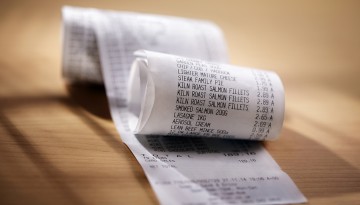
Researchers seek to support New York’s food and agriculture producers by calculating the “true cost of food,” which takes into account hidden costs like climate, environmental, fiscal, health and workers impacts.
Following concern on energy-hogging cryptocurrency mining, Cornell Engineering research says that carbon capture and renewable energy may help mining operations reduce their wasteful footprint.
Eleven 2030 Project grants were awarded to Cornell faculty for an array of fast-track climate solutions, including tools to help New York communities reduce their greenhouse gas emissions.
Cornell has been awarded a $15 million, five-year grant from the National Science Foundation to lead a newly established Innovation Corps Hub that will support science and technology entrepreneurship in rural regions.
The startups vying for $3 million in prize money at this year’s Grow-NY Food and Agriculture Competition aren’t just bringing revolutionary innovations to market, and working to solve the problems confronting agri-food systems – winners are required to make a positive impact on the region, too.
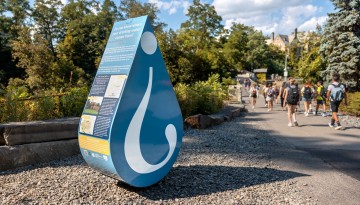
Turning on a faucet for a drink rarely elicits deep thoughts on how the water got there. But two new Water Resources Institute “water drops” are packed with a torrent of information.
New kinds of job opportunities abound in the cannabis and clean energy industries, and justice-involved people, people with disabilities and others can benefit from improved wages and training, according to the ILR School’s New York at Work report, published Aug. 30.