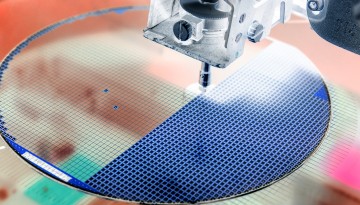
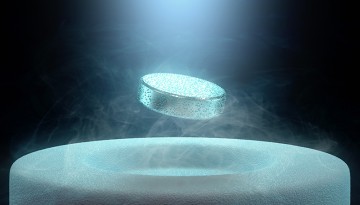
With a little twist and the turn of a voltage knob, Cornell researchers have shown that a single material system can toggle between two of the wildest states in condensed matter physics.
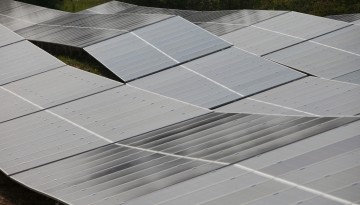
As New York prepares for a carbon-free energy future, public support for utility-scale solar farms is much lower than support for smaller solar projects, says new Cornell research.
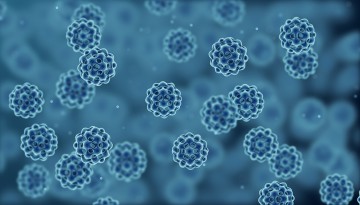
A Cornell study shows that certain materials can change the biochemical behavior of surface microbes living on them, and is the first to show an insoluble material exerting control over biochemical behaviors of bacteria.
Far above the isle of La Palma in Spain’s Canary Islands, two Cornell scientists closely examined the airborne effects of the erupting Cumbre Vieja volcano.
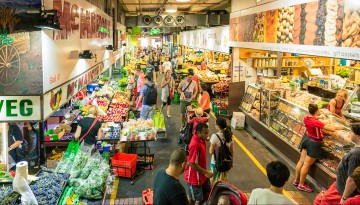
Researchers set out to model the probability of how often pairs of shoppers might overlap in a store – an approach that could be used to predict the transmission of COVID-19, and guide strategies to reduce its spread.
The research-sharing platform is a free resource for scholars around the world in fields including physics, math and computer science, who use the service to share their own cutting-edge research and read work submitted by others.
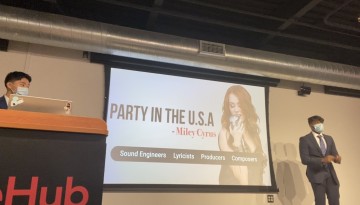
Four teams of undergraduate students were named winners of the Big Ideas Competition at Cornell, with ideas that help musicians connect, detect heart problems, train unemployed young adults and help with pollution issues in developing countries.
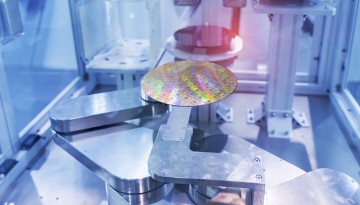
Cornell researchers have found that 3D semiconductor particles have 2D properties, which can be leveraged for photoelectrochemical processes that boost solar energy conversion technologies.
Researchers grew a thin film of one of the oldest known superconductors on top of a semiconductor, and for the first time measured the electronic properties of the junction between the two materials, paving the way for hybrid superconductor-semiconductor quantum devices.