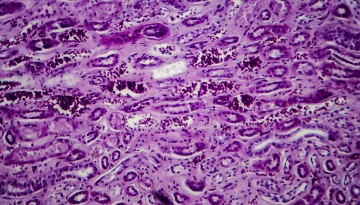
Combining state-of-the-art X-ray technology and cryogenics, Cornell physics researchers have developed a new method for analyzing proteins in action, a breakthrough that will enable the study of far more proteins than is possible with current methods.
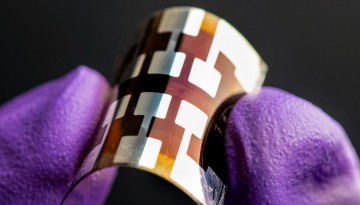
A Cornell-led collaboration received a $3 million grant from the U.S. Department of Energy to use machine learning to accelerate the creation of low-cost materials for solar energy.
A new study identifies bacterial genes that may make it easier for scientists to engineer a bacteria that takes in renewable electricity and uses the energy to make biofuels.
Forty-three high school juniors and seniors teamed up remotely from July 19-23 to build an interconnected system of hardware and software as part of Cornell Engineering’s annual CURIE Academy.
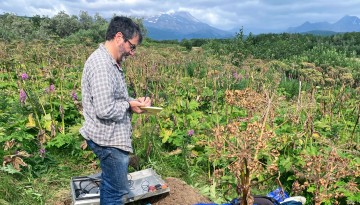
When an 8.2-magnitude earthquake struck off the coast of Chignik, Alaska, on July 29, geophysicist Geoffrey Abers raced north with a group of collaborators to record its aftershocks.
Concrete expert Ken Hover, Ph.D. ’84, professor of civil and environmental engineering, will help the federal government investigate the June 2021 collapse of the Champlain Towers South condominium in Surfside, Florida.
Cornell assistant professors researching artificial intelligence, sustainable energy, digitization in manufacturing and chemistry have recently received early-career awards from the National Science Foundation and the Department of Energy.
A new program provides undergraduates, graduate students and postdoctoral researchers from the College of Engineering and the College of Arts and Sciences with hands-on experience in developing innovative small spacecraft missions in high-priority areas of space science.