The Cornell China Center has announced six new grant awards, totaling $140,000, to support research by Cornell faculty teams partnering with researchers in China.
Ph.D. student Ekaterina Landgren has received a 2021 Zonta Amelia Earhart Fellowship. The program recognizes women pursuing doctoral degrees in aerospace engineering and space sciences.
A Cornell-led collaboration identified an unusual behavior of superfluid helium-3 when it undergoes a phase transition between two different superfluid states – a transition that theoretically shouldn’t happen reliably.
The School of Civil and Environmental Engineering will offer an optional smart cities undergraduate concentration, recognizing the growing ubiquity of sensors, smart devices and real-time data in related fields.
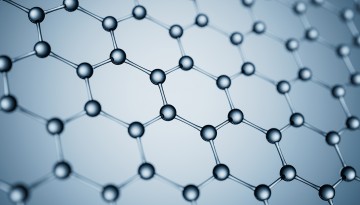
PARADIM has received a second award of $22.5 million from the National Science Foundation to fund another five years of enabling scientists, engineers and entrepreneurs nationwide to design and create new inorganic materials for use in electronics.
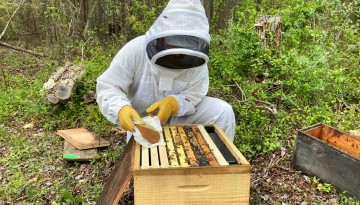
A Cornell-developed technology provides beekeepers, consumers and farmers with an antidote for deadly pesticides, which kill wild and managed bees that pollinate crops.
Cornell's Adult University invites alumni, their friends and family, and the general public to expand their minds this summer by taking live, online courses for adults and youth taught by Cornell faculty and graduate students.
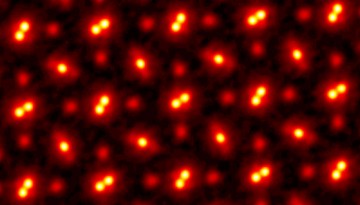
Cornell researchers have topped their own record for atomic resolution with an electron microscope pixel array detector that incorporates sophisticated 3D reconstruction algorithms.
An interdisciplinary team of Cornell researchers has created a cohort of new quantum metamaterials that can achieve superconductivity at temperatures competitive with state-of-the-art solid-state materials synthesis.