NYSERDA will give Cornell $1.65 million in incentives for energy studies and project work to develop a smaller carbon footprint for campus, toward the university’s net-zero carbon goal by 2035.
Projects aiming to combat online harassment of women and improve the computer models used to predict disease were among the five at Cornell to receive 2019-2020 Google Faculty Research Awards.
Recyclable plastic containers with the No. 2 designation could become even more popular for manufacturers as plastic milk jugs, dish soap and shampoo bottles may soon get an environmental makeover.
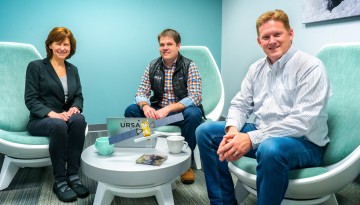
Ursa Space Systems, a geospatial intelligence agency located in Ithaca and founded by alumni Adam Maher and Derek Edinger, and Julie Baker, recently obtained $15 million in Series B funding.
Cornell faculty members are finding answers to questions related to a world on the move with a boost from Cornell’s first Migrations grants, awarded by the “Migrations” Global Grand Challenge.
Physicist Suzanne Staggs will talk about detecting radiation left over from the Big Bang, using the Atacama Cosmology Telescope, in the Spring Hans Bethe Lecture, March 11 in Rockefeller Hall.
NASA’s Mars InSight lander is now serving up the red planet’s meteorological secrets: Gravity waves, dust devils and the steady, low rumble of infrasound.
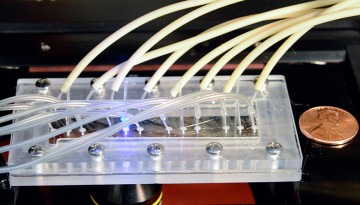
A Cornell-led team took an interdisciplinary approach to analyzing the behavior of breast tumor cells by employing a statistical modeling technique more commonly used in physics and economics.