Richard Schuler, professor emeritus in both economics and engineering and former deputy chairman of the state Public Service Commission, died Feb. 13 at age 81.
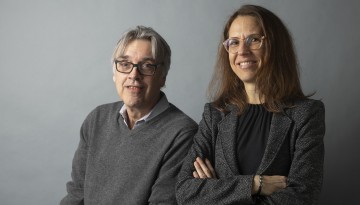
Richard Cerione, the Goldwin Smith Professor of pharmacology and chemical biology, and Claudia Fischbach, professor of biomedical engineering, discuss their collaborative research on cancer biology – the metabolic changes required for cancer development and cancer cells' interactions with other cells.
Researcher from Cornell and Virginia Tech have identified the process by which fungus is spread from plant to plant, carrying disease that costs billions annually in lost crops.
Climate change expert Natalie Mahowald will deliver the keynote address on removing atmospheric carbon at the 2019 Polson Institute Future of Development symposium.
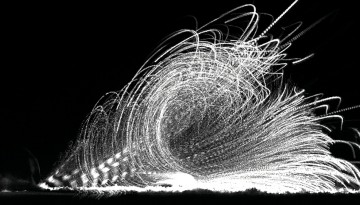
A team led by Paul Steen, the Maxwell M. Upson Professor in Engineering, has created a periodic table of droplet motions, inspired in part by parallels between the symmetries of atomic orbitals, which determine elements’ positions on the classic periodic table, and the energies which determine droplet shapes.
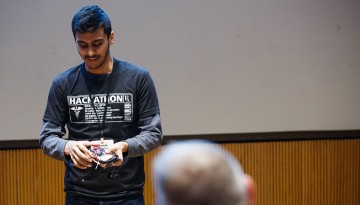
The third annual NYC Health Hackathon, hosted Feb. 8-10 by Weill Cornell Medicine, brought teams together in an attempt to solve myriad medical challenges.
If you’re planning a trip to Elysium Planitia on Mars, pack a sweater. Beginning today, NASA’s Jet Propulsion Laboratory will provide daily weather reports for Mars, courtesy of the red planet’s newest robotic resident, InSight.
Cornell researchers have found that inorganic materials are able switch between discrete states almost instantaneously, bridging the gap between what’s known about phase changes in organic molecules.