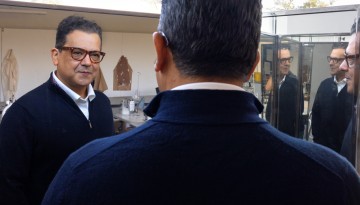
In a fast-fashion, throw-clothes-away world, textile expert Juan Hinestroza (Human Ecology) and a group of scientists have new ways to recycle wasted polyester into new useful products.
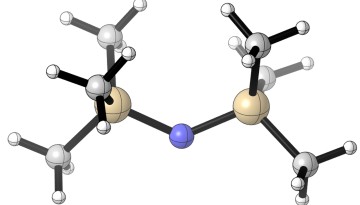
Cornell researchers attached large fragments to temperamental "radical" molecules, increasing their girth to insulate them from their hyperreactive partners – a method that could help create improved derivatives of pharmaceutical compounds.
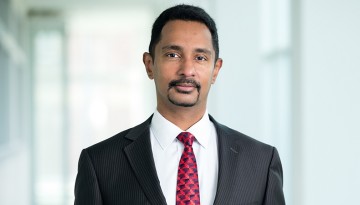
Ray Jayawardhana, the Harold Tanner Dean of the College of Arts and Sciences, has been named provost of Johns Hopkins University in Baltimore. Astronomy professor Rachel Bean has been named interim A&S dean, effective July 13.
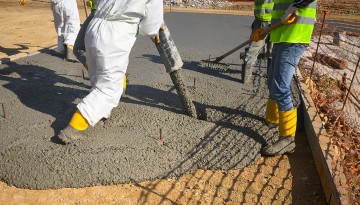
Greeshma Gadikota, associate professor of engineering, has gathered a team to help capture carbon dioxide in the concrete-making process as they aim to create low-carbon construction materials from it.
Unused solar, wind and hydroelectric power in the U.S. could support the exponential growth of transactions involving non-fungible tokens, Cornell Engineering researchers have found.
With artificial intelligence poised to assist in profound scientific discoveries that will change the world, Cornell is leading a new $11.3 million center focused on human-AI collaboration that uses mathematics as a common language.
Cornell researchers have revealed the intricate nanotextures in thin-film materials, offering scientists a new, streamlined approach to analyzing potential candidates for quantum computing and microelectronics, among other applications.
Cornell scientists have revealed a new phase of matter in candidate topological superconductors that could have significant consequences for condensed matter physics and for the field of quantum computing and spintronics.