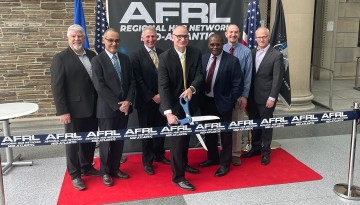
The event included a ribbon-cutting ceremony, remarks from AFRL Chief Technology Officer Dr. Timothy Bunning, and presentations from researchers who received funding during the Fall 2022 funding cycle.
New research from Cornell and the Smithsonian Institution deepens the geological understanding of Earth’s continents by testing and ultimately eliminating a popular hypothesis about why continental and oceanic crusts have contrasting compositions.
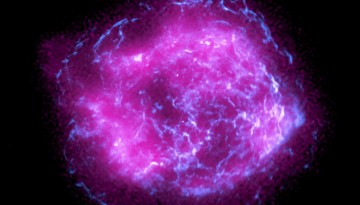
Quantum electrodynamics can explain the puzzling first observations of polarized X-rays emitted by a neutron star with a powerful magnetic field, according to a Cornell astrophysicist.
Cornell Engineering has announced the winners of its seventh annual Engineering Innovation Competition, which recognizes innovative product concepts and prototypes from students.
Johannes Lehmann, Colin Parrish, Bik-Kwoon Tye and Michelle Wang are Cornell’s 2023 electees to the National Academy of Sciences (NAS), the academy announced May 2 at the close of its 160th annual meeting.
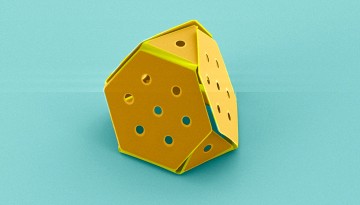
A Cornell-led collaboration harnessed chemical reactions to make microscale origami machines self-fold – freeing them from the liquids in which they usually function, so they can operate in dry environments and at room temperature.
Cornell Racing students made history after winning the 2023 Toyota Green Grand Prix, the first competition in the team’s more than three decades of racing that they drove an all-electric vehicle.
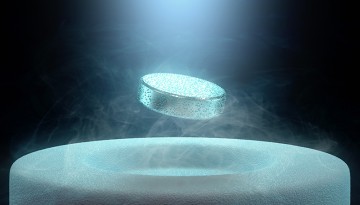
Cornell researchers have for the first time characterized a key property of the superconducting state of a class of atomically thin materials that are too difficult to measure due to their minuscule size.
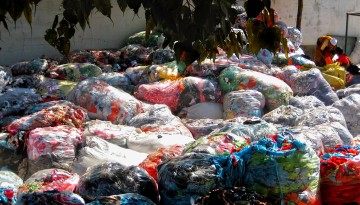
To make textiles more sustainable, a new method allows researchers to break old clothing down chemically and reuse polyester compounds to create fire resistant, anti-bacterial or wrinkle-free coatings that could then be applied to clothes and fabrics.