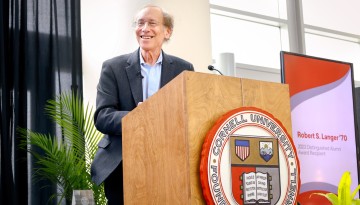
Robert Langer ’70, whose pioneering work in biotechnology, drug delivery and tissue engineering has made him one of the most prolific inventors in medicine, received the Cornell Engineering Distinguished Alumni Award during a celebration hosted April 19.
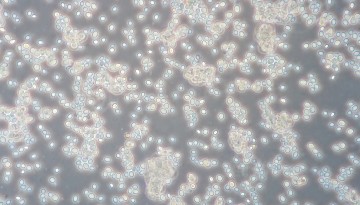
A new research project co-led by Cornell Engineering aims to unravel the physical limits of cell size in budding yeast, with the ultimate goal of learning more about how cells, the fundamental units of life, modulate size control during evolution.
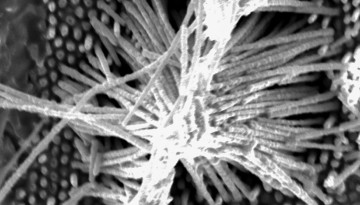
Researchers used thermomechanical nanomolding to create single-crystalline nanowires that enable metastable phases that would otherwise be difficult to achieve.
Time Magazine has named Britney Schmidt, associate professor of astronomy in the College of Arts and Sciences and Earth and atmospheric sciences in Cornell Engineering, to the 2023 list of the world’s 100 most influential people.
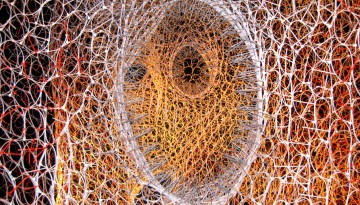
With a $3 million National Science Foundation grant, Cornell researchers are creating a new approach to architecture by learning how plants and animals form internal structures.
Cornell researchers constructed a simple model containing exotic particles called non-Abelian anyons, compact and practical enough to run on modern quantum hardware.
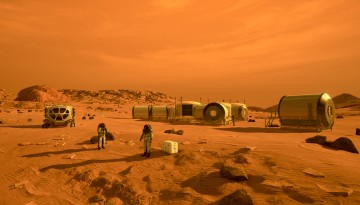
Can humans endure long-term living far from our home planet? Maybe, according to a new theory that describes the need for gravity, oxygen, obtaining water, developing agriculture and handling waste.
The Bezos Earth Fund grant will support a project developing low-cost virtual livestock fencing that would benefit farmers and animals, improve public health in developing countries and combat climate change.
Using a biomaterials-based organoid, a multi-institution team led by Matt DeLisa of Cornell Engineering was able to assess the strength of the immune response to a glycoengineered vaccine in days, instead of months.