At the upcoming Conference of the Parties – best known as COP27 – 11 Cornell students will help delegations from small countries gain a stronger environmental voice.
The Eclectic Convergence conference included talks from six entrepreneurs, business executives and venture capitalists, as well as a pitch competition.
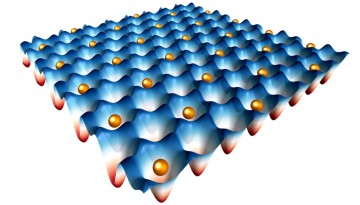
Physicist Kin Fai Mak has received a $1.25 million grant from the Moore Foundation Experimental Physics Investigators Initiative to further his research into electron behaviors by studying two-dimensional crystals.
Cornell has been selected to join the Schmidt AI in Science Postdoctoral Fellowship, a program of Schmidt Futures, to accelerate the next scientific revolution by applying artificial intelligence to research in science, technology, engineering and mathematics.
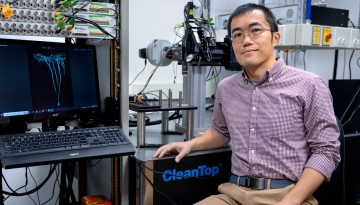
Associate professor Alex Kwan is using optical microscopy and other tools to map the brain’s neural response to psychedelic drugs, an approach that could lead to the development of fast-acting antidepressants.
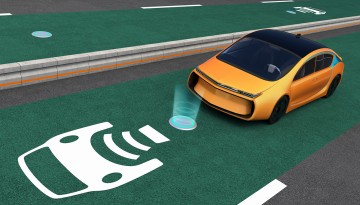
Efficient pricing will be crucial to minimize energy costs for private operators who provide on-the-highway wireless charging for electric cars – and for consumers who will use this service.
Popular Science’s 2022 list of “the top up-and-coming minds in science” includes Samitha Samaranayake, assistant professor in of civil and environmental engineering, citing his work to design algorithms to help varied modes of mass transit work more seamlessly together.
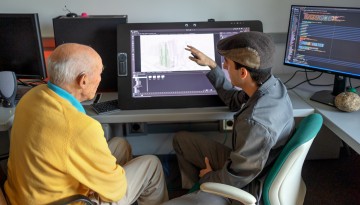
At 88 years old, professor Don Greenberg ’55 is still on the cutting edge: He’s launched a new undergraduate and graduate course for students in both architecture and computer science, “Design in the Age of Digital Twins.”