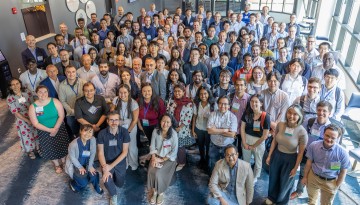
Cornell University hosted the 2025 SUPREME annual review, bringing together academia, industry, and government to advance next-generation semiconductor innovation and workforce development.
A Cornell-led collaboration devised a potentially low-cost method for producing antibodies for therapeutic treatments: bioengineered bacteria with an overlooked enzyme that can help monoclonal antibodies boost their immune defenses.
Nearly a decade after they first demonstrated that soft materials could guide the formation of superconductors, Cornell researchers have achieved a one-step, 3D printing method that produces superconductors with record properties.
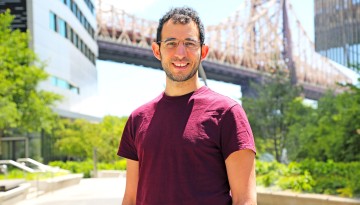
Mako, co-founded by assistant professor Mohamed Abdelfattah, sets out to tackle one of artificial intelligence’s most pressing infrastructure challenges: optimizing the computing efficiency of graphics processing units.
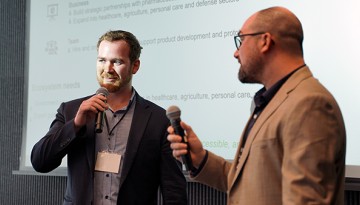
Two members of Cornell’s business incubators have been accepted to Cohort 2025 of the Activate Fellowship, a two-year program that supports scientists and engineers in their entrepreneurial ventures.
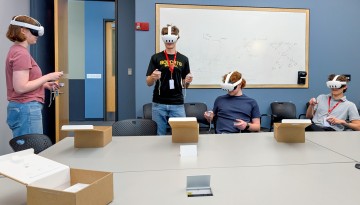
The Cornell NanoScale Science and Technology Facility has launched a free VR youth outreach module, designed to prepare the next generation of students in cutting-edge microchip fabrication.
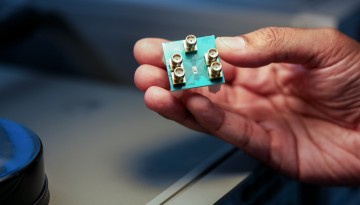
Cornell Engineering researchers have developed a low-power microchip they call a “microwave brain,” the first processor to compute on both ultrafast data signals and wireless communication signals by harnessing the physics of microwaves.