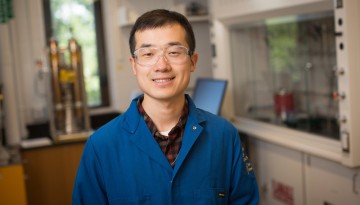
A Cornell-led project found a way to tune the speed and increase the range of energy flow in organic semiconductors, an approach that could eventually lead to more efficient solar cells, sensors and LEDs.
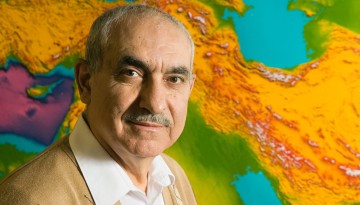
Over the next 10 years, the nation’s top planetary scientists are proposing exploratory voyages to the frigid, distant solar-system planet Uranus and the icy Saturnian moon Enceladus.
Swelling colloids – mixtures, such as milk and paint, in which particles are suspended in a substance and which can grow up to 100 times larger under certain temperatures – could be used to fix flow pathways in underground geothermal systems, a problem that has hobbled investment in geothermal energy.
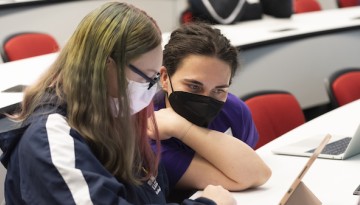
A sophomore and a two juniors have won Goldwater Scholarships, the top undergraduate award for students pursuing careers in mathematics, the natural sciences and engineering.
“Help Cure Alzheimer’s Disease!,” a workshop hosted by students from the Meinig School of Biomedical Engineering, provided an opportunity for high-school girls to contribute directly to Alzheimer’s research.