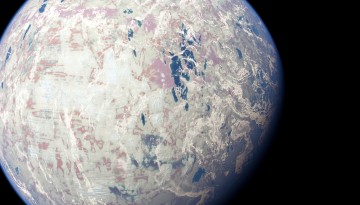
As ground-based and space telescopes improve, astronomers need a color-coded guide to compare Earth’s biological microbes to cold, distant exoplanets to grasp their composition.
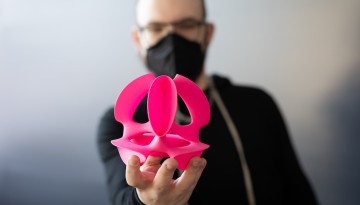
Richard Nally will spend his three-year Klarman fellowship seeking to understand the mathematical structures at the root of gravity and quantum mechanics.
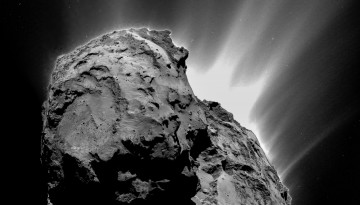
After a European spacecraft rendezvoused with Comet 67P about seven years ago, astronomers now have found a cosmic revelation: It emits molecular oxygen drawn from its nucleus.
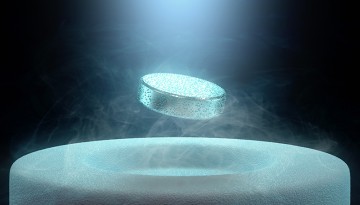
Cornell physicist’s discovery could lead to the engineering of high-temp superconducting properties into materials useful for quantum computing, medical imaging.
A $10 million gift from an alumni donor will grow the roster of faculty, students and equipment needed to study the mysterious behavior of matter at atomic and subatomic scales, strengthening the university’s position as a leader in quantum science and technology.
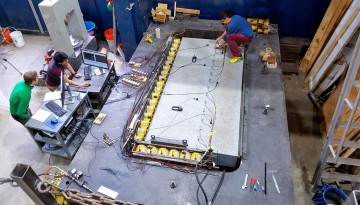
By examining earthquakes in a fresh way, a modeling revelation discovered in the lab by Cornell engineers helps science inch closer to accurate quake forecasts.
Eleven assistant or associate professors representing four colleges have recently received National Science Foundation Faculty Early Career Development Awards to support their research objectives.
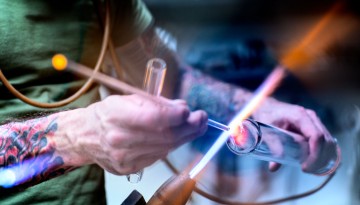
Karl Termini designs, creates and repairs unique scientific glassware, saving departments time and money and ensuring researchers get exactly the equipment they need.
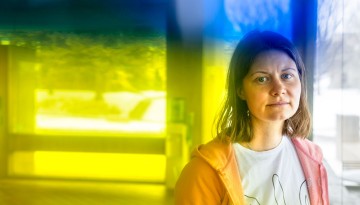
Ukrainian students and researchers share thoughts about their loved ones’ safety and their country’s future as they absorb the ongoing news of Russia’s invasion of Ukraine.