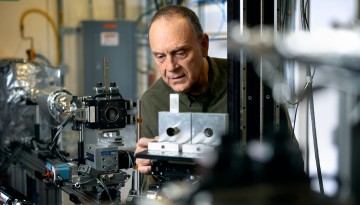
Cornell has been awarded an $8.9 million cooperative agreement from the Air Force Research Laboratory for a regional research hub to spark collaborations in academia, government and industry.
From cell-sized robots to the manipulation of human genes, Arts Unplugged: Science of the Very, Very Small on March 9 will explore nanoscale and quantum innovations shaping our future.
Cornell engineers have developed a new tool by combining machine learning and optimization modeling to provide hour-by-hour analysis of New York’s energy needs.
A Cornell-led collaboration used electrochemistry to stitch together simple carbon molecules and form complex compounds, eliminating the need for precious metals or other catalysts to promote the chemical reaction.
For the past year, Cornell doctoral students Megan Barrington and Christian Tate have been living, thinking and working on the red planet Mars, digitally commuting from our own blue world.
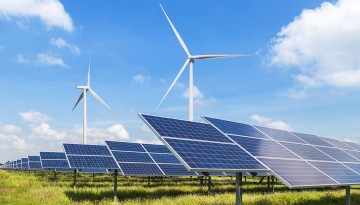
Cornell researchers and a startup have received more than $7 million in federal grants to advance novel clean energy research that includes wirelessly charging electric vehicles, low-carbon jet fuel and construction materials made from waste.
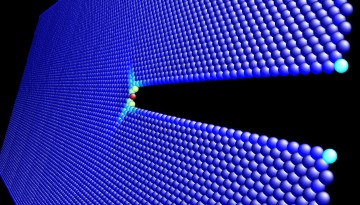
Researchers made a breakthrough in understanding how some materials break. Their discovery could help engineers better anticipate a material’s behavior and design novel alloys that resist fatigue.
Assistant professors Pamela Chang, Antonio Fernandez-Ruiz, Daniel Halpern-Leistner and Peter McMahon have won 2022 Sloan Research Fellowships from the Alfred P. Sloan Foundation.