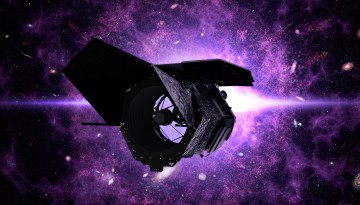
A new Cornell study finds that next-generation telescopes used to see exoplanets could confuse Earth-like planets with other types of planets in the same solar system.
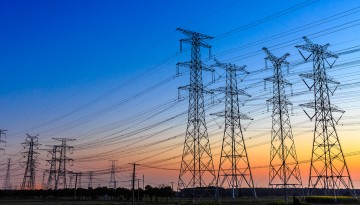
Fumbling to find flashlights during blackouts soon may be a memory, as quantum computing and AI may quickly solve an electric grid’s hiccups so fast, humans may not notice.
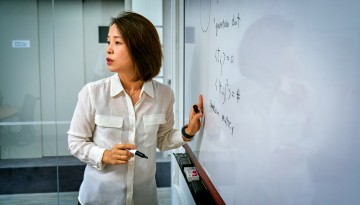
Physicist Eun-Ah Kim is leading the way toward applications of quantum mechanics, including the discovery of new quantum materials and the development of quantum computing.
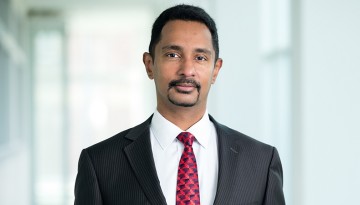
Astronomer Ray Jayawardhana, the Harold Tanner Dean of Arts and Sciences, is featured in the new PBS NOVA/BBC documentary on neutrinos, “Particles Unknown,” airing Oct. 6.
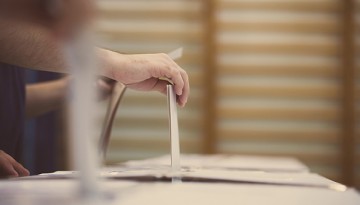
New research from the College of Engineering lays out in detail why ranked-choice voting, combined with multi-member legislative districts, promotes fair representation, particularly when it comes to blunting the practice of gerrymandering.
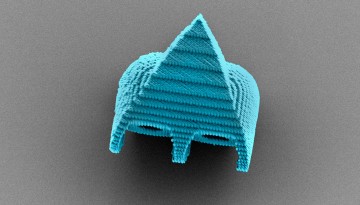
Cornell researchers created cell-size robots that can be powered and steered by ultrasound waves. Despite their tiny size, these micro-robotic swimmers could be a formidable new tool for targeted drug delivery.
The Spaceflight Mechanics Cornell Certificate Program will be available through eCornell and offers insight into a variety of topics from measuring space and time to planning orbital maneuvers and interplanetary trajectories.
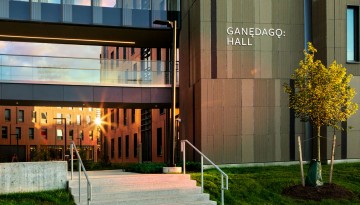
Toni Morrison Hall and Ganędagǫ: Hall – two newly opened student residential buildings – were designed and built in line with Cornell’s high standards for green infrastructure, a critical component to advancing the campus goal of carbon neutrality by 2035.
Biogeochemistry – an interdisciplinary field that examines the elemental cycles through Earth’s air, land and water – is critical to understanding climate change. Learn how it found its origin at Cornell CALS more than six decades ago.