The drone-like device “Ingenuity” will face the challenge of flying in an atmosphere only 1% as dense as the Earth’s surface, says Rob Sullivan, a member of the Mars 2020 mission.
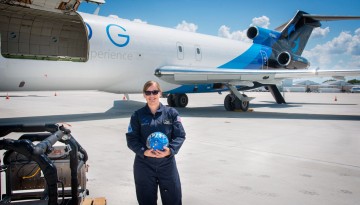
Laura Jones-Wilson, M.S. ’10, Ph.D. ’12, learned the term ‘aerospace engineer’ from watching ‘Star Trek’ episodes. With a Cornell education, she has landed her dream job at NASA.
Cornell researchers are using low-cost aluminum to create a rechargeable battery that is safer, less expensive and more sustainable than lithium-ion batteries.
John A. Swanson ’61, M.Eng. ’63, an innovator in the application of finite-element methods of engineering, will be honored with the 2021 Cornell Engineering Distinguished Alumni Award.
Jake Turner, postdoctoral researcher in astronomy, has been named a Sagan Fellow in the program, where he will continue his research on magnetic fields, atmospheres and orbital evolution of exoplanets.
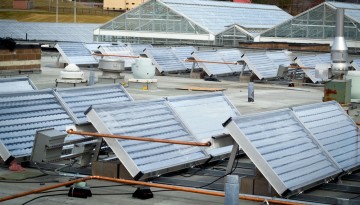
A new solar collector array atop Guterman Research Center is one of several sustainability projects, from reusable dining serviceware to living laboratory experiments, that are continuing apace despite the many interruptions made by COVID-19 to campus life.
The Cornell astronomy department will host 51 Pegasi b Fellow Samantha Trumbo, a doctoral student in planetary science at the California Institute of Technology, as she follows up on her breakthrough work on Jupiter’s moon, Europa.
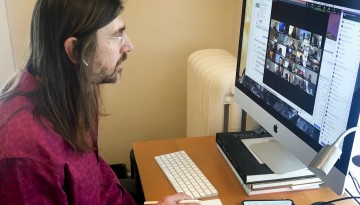
Doug McKee and his research team found that structured peer interaction helped minimize the impact of the shift to remote teaching during the COVID-19 pandemic.