Cornell Engineering has announced winners of its Scale-Up and Prototyping Awards, which give teams of engineering faculty and students up to $40,000 to commercialize startup technologies.
The Spitzer Space Telescope – with its Cornell-developed infrared spectrograph instrument – has been peering through murky cosmic dust to study the distant heavens. The mission ends Jan. 30.
Cornell has signed on with the Institute for Research on Innovation and Science, a consortium of America’s leading higher education institutions focused on demonstrating the public value of research.
Cornell researchers have created a soft robot muscle that can regulate its temperature through sweating. This technology will enable untethered, high-powered robots to operate for long periods of time without overheating.
Cornell events this week include a talk with actress Vanessa Bayer; an impeachment law panel discussion; "Some Like It Hot" in a classic American cinema series; and a community concert with the Glee Club and Chorus.
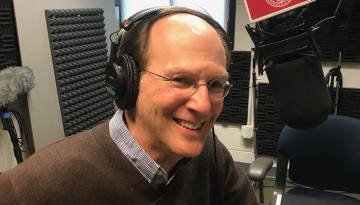
Steven Strogatz, the Jacob Gould Schurman Professor of Applied Mathematics, hosts a new podcast series for Quanta Magazine called “The Joy of x” in which he interviews scientists and mathematicians about their lives and work.
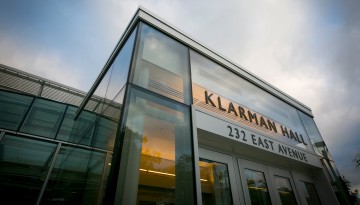
Six of the world’s most promising early-career scholars are recipients of the inaugural three-year Klarman Postdoctoral Fellowships, in Cornell’s College of Arts and Sciences.
Cornell’s newest science communications vehicle is “Modified,” a retrofitted, retro-vibe food truck that serves modified munchies with a side of biotechnology knowledge.