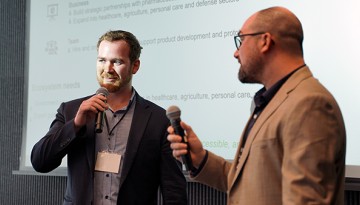
Two members of Cornell’s business incubators have been accepted to Cohort 2025 of the Activate Fellowship, a two-year program that supports scientists and engineers in their entrepreneurial ventures.
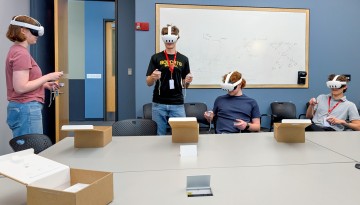
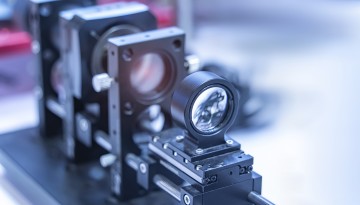
The Cornell NanoScale Science and Technology Facility has launched a free VR youth outreach module, designed to prepare the next generation of students in cutting-edge microchip fabrication.
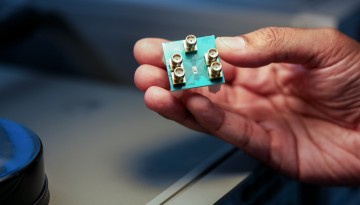
Cornell Engineering researchers have developed a low-power microchip they call a “microwave brain,” the first processor to compute on both ultrafast data signals and wireless communication signals by harnessing the physics of microwaves.
Cornell chemistry researchers have designed a light-powered, reusable catalyst that’s pre-charged by electricity and capable of driving challenging reactions, with applications including drug development and environmental clean-up.
A new $5 million initiative, funded by the Astera Institute with experimental work conducted at the Cornell High Energy Synchrotron Source, aims to make diffuse scattering accessible to the public and the broader scientific community.
Researchers developed machine-learning models that can sift through cell-free RNA and identify key biomarkers for chronic fatigue syndrome, a debilitating disease that is difficult to confirm in patients because its symptoms can be easily confused with those of other illnesses.
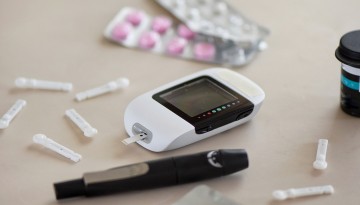
Cornell researchers have developed an implant system that can treat Type 1 diabetes by supplying extra oxygen to densely packed insulin-secreting cells, without the need for immunosuppression.