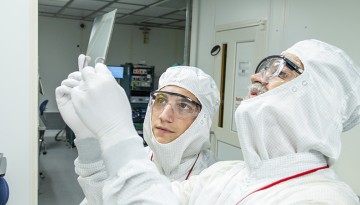
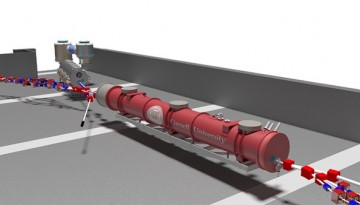
Visiting students representing the next generation of physicists got a taste of life as a researcher during a pair of eight-week summer programs hosted by the Cornell Laboratory for Accelerator-based Sciences and Education.
A new technique that combines electricity and chemistry offers a way for pharmaceuticals to be manufactured in an easily scaled-up and sustainable way.
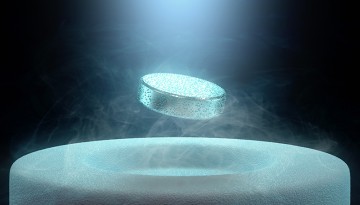
Research co-authored by assistant professor of physics Brad Ramshaw sheds new light onto the unusual properties of the high-temperature superconductor strontium lanthanum copper oxide.
A research group led by Andrej Singer, assistant professor of materials science and engineering, has won a grant from the Department of Energy for research aimed at creating new quantum states of matter.
A National Academy of Sciences committee has endorsed the idea of building an electron-ion collider in the U.S. The project would be helped by research done at CBETA, Cornell's energy recovery linear accelerator.
New research from Cornell's Collective Embodied Intelligence Lab examines how popcorn’s unique qualities can power inexpensive robotic devices that grip, expand or change rigidity.