Bill Nye ’77, known by millions as the Science Guy and a tireless advocate for science education, received the Presidential Medal of Freedom, the United States’ highest civilian honor, at a White House ceremony Jan. 4.
An international marine research team guided by Cornell expertise has successfully completed an ambitious drilling project to investigate the plate boundary fault that ruptured during the Tohoku earthquake that devastated Japan in 2011.
A Cornell-led research team has developed a method for extracting gold from electronics waste, then using the recovered precious metal as a catalyst for converting carbon dioxide, a greenhouse gas, to organic materials.
The eyes may be the window to the soul, but the pupil is key to understanding how, and when, the brain forms strong, long-lasting memories, Cornell researchers have found.
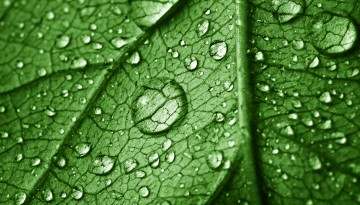
New research elucidates a raindrop’s impact on a leaf - the equivalent in mass of a bowling ball hitting a person - and the physical dynamics that help the leaf survive.
Héctor D. Abruña, the Émile M. Chamot Professor of Chemistry in the College of Arts and Sciences, will receive the Enrico Fermi Award, one of the oldest and most prestigious science and technology honors bestowed by the U.S. government.
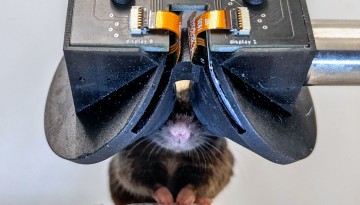
Cornell researchers built miniature VR headsets to immerse mice more deeply in virtual environments that can help reveal the neural activity that informs spatial navigation and memory function and generate new insights into disorders such as Alzheimer’s disease and its potential treatments.
R. Keith Dennis, professor emeritus of mathematics in the College of Arts and Sciences, died Dec. 12 following a prolonged battle with metastatic prostate cancer. He was 80.
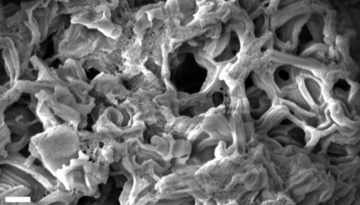
Cornell researchers have engineered a nanoporous carbon with the highest surface area ever reported, a breakthrough that is already proving beneficial for carbon-dioxide capture and energy storage technologies.