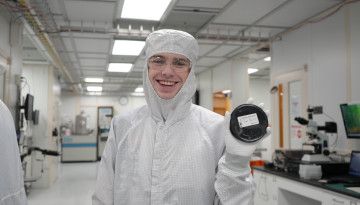
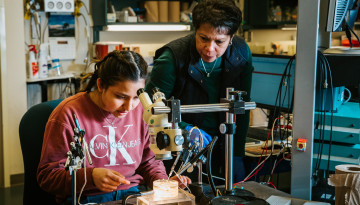
High school seniors from Tompkins-Seneca-Tioga BOCES stepped into the cleanroom at Cornell’s Cornell NanoScale Science and Technology Facility this January, trading classroom labs for hands-on experience in one of the nation’s most advanced university nanofabrication facilities.
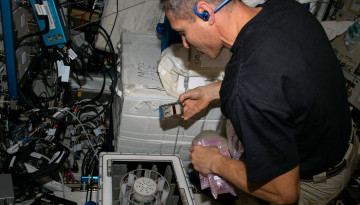
Researchers collaborated to study how those microbes extract platinum group elements from a meteorite in microgravity, with an experiment conducted aboard the International Space Station.
CTI’s “The Art of Teaching” series returns Feb. 11 with “The Art of the Lab.” Faculty panelists will share creative instructional approaches for designing student-centered laboratory experiences.
Twelve outstanding early-career scholars have been chosen as the 2026 cohort of Klarman Postdoctoral Fellows to pursue research in the sciences, social sciences and humanities.
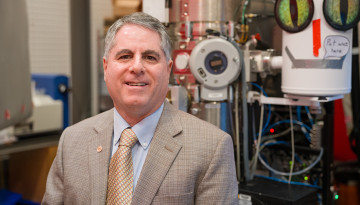
Four Cornell faculty members are among 99 researchers across the U.S. who have been awarded grants by the U.S. Department of Energy as part of its Office of Science Early Career Research Program.
Cornell researchers studying microplastics, robotics and machine learning are recent recipients of National Science Foundation Faculty Early Career Development Awards.
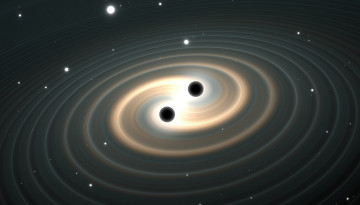
The gravitational wave, a ripple in space-time set off by two black holes colliding, reached U.S.-based Laser Interferometer Gravitational-Wave Observatories in January 2025.