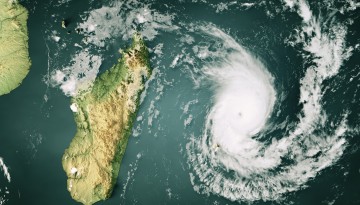
As world governments prepare the first-ever Global Stocktake, assessing whether they are living up to climate targets, Cornellians’ research is playing a critical role.
A research collaboration has found an efficient way to expand the collective behavior of swarming microrobots: Mixing different sizes of the micron-scale ‘bots enables them to self-organize into diverse patterns that can be manipulated when a magnetic field is applied.
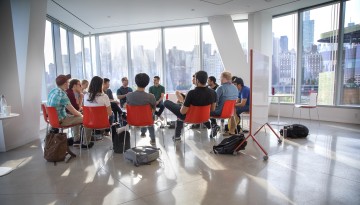
The HEXT workshop empowers students to become productive members of the CHESS user community by combining informative lectures, hands-on demonstrations, and instruction in proposal writing. With its focus on attracting diverse participants and providing practical training, the HEXT workshop sets the stage for a more inclusive and vibrant synchrotron research landscape.
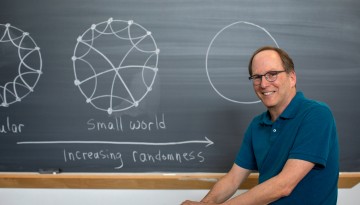
In 1998, Professor Steven Strogatz and then-student Duncan Watts, Ph.D. '97, published a model that launched the field of network science – the results of which are ubiquitous in today’s world.
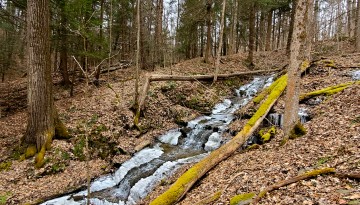
Cornell Botanic Gardens has acquired 81 acres adjacent to the Fischer Old-growth Forest natural area in Newfield, New York, to further protect some of the county’s most mature trees – some of them 300 years old.
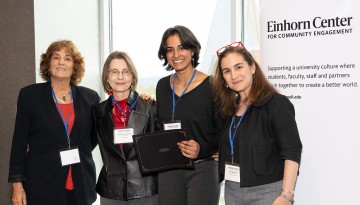
Natalia Urbas ’23 received this year’s Class of 1964 John F. Kennedy Memorial Award. She will use the $15,000 award funding to support underrepresented minorities interested in pursuing careers in research and technology.
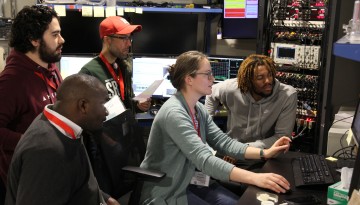
Cornell is breaking new ground in electron beam research with the HERACLES beamline, a state-of-the-art electron gun in Newman Lab that mimics the harsh environments of the world’s largest particle colliders.