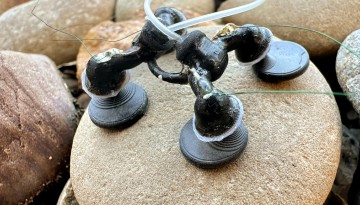
Enabled by a custom thermometer, Cornell researchers have observed superfluid fluctuation effects, possibly gaining new insight for quantum computing and the physics of the early universe.
Nicole Benedek, associate professor of materials science and engineering, uses theoretical and computational techniques to design functional materials that can improve modern technologies such as computer chips, ultrasound machines and solar panels.
A new Cornell-led project aims to use and reduce carbon dioxide emissions and residue from aluminum recycling – a carbon-heavy process – to produce high value products and address climate change.
The two-year contract extension for the Mid-Atlantic and Midwest regional hub networks, based at Cornell University and Purdue University respectively, signals AFRL’s commitment to supporting the Hub Networks and the critical connections they have enabled within less than two years of operating.
An international team of researchers, including chemist Robert DiStasio of Cornell, has introduced a novel concept, “freedom of design,” that has important implications in the fields of rational molecular design and computational drug discovery.
Depending on lifestyle choices and work arrangements, remote workers can have a 54% lower carbon footprint compared with onsite workers, according to a new study by Cornell and Microsoft.
Researchers combined soft microactuators with high-energy-density chemical fuel to create an insect-scale quadrupedal robot that is powered by combustion and can outperform its electric-driven competitors.
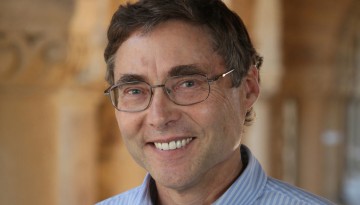
Nobel Prize-winning physicist Carl Wieman will visit campus Sept. 25-29 as an A.D. White Professor-at-Large, working with students and faculty and offering a public talk about his work in science education.