Researchers devised a new method to image intact bacterial cells and large organelle up to 500-800 nanometers thick – a roughly fivefold improvement over current methods.
Ithaca Community Recovery schedules more than 200 meetings a month for 35 groups - a new platform designed by project team Hack4Impact will make it easier to populate, track and edit the calendar.
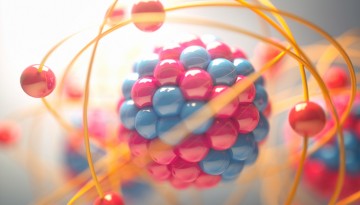
After expanding to its peak size about 11 billion years from now, the universe will begin to contract – snapping back like a rubber band to a single point at the end, according to a Cornell physicist.
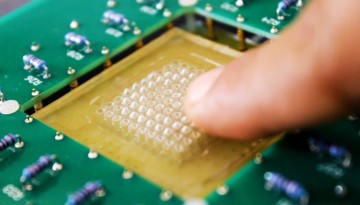
By combining the design principles and materials of soft robotics with microscale combustions, researchers created a high-resolution electronic tactile display that can operate in messy, unpredictable environments.
A Cornell researcher and collaborators have developed a machine-learning model that encapsulates and quantifies the valuable intuition of human experts in the quest to discover new quantum materials.
Drawing on cutting-edge technology and interdisciplinary expertise, researchers are launching Menopause Health Engineering, a new initiative to uncover how menopause shapes health and disease.
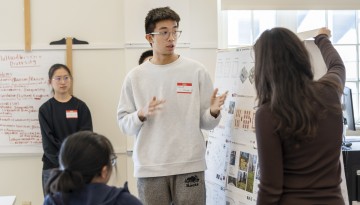
The Center for Teaching Innovation will host “What Works,” on Oct. 1, featuring presentations, the Canvas Course Spotlight awardees, and a poster showcase that will demonstrate engaged learning approaches from Cornell faculty teaching in a diverse range of courses and fields.
Tianyi Chen is pushing the boundaries of artificial intelligence by asking a pressing question: What if AI could be engineered not just to optimize for a single outcome, but to make smarter, more balanced decisions — much like humans do?