A portable diagnostic device designed by researchers at Cornell Engineering and Weill Cornell Medicine seeks to provide a fast and accurate diagnosis of Kaposi sarcoma, a common yet difficult-to-detect cancer that often signals the presence of HIV infection.
Thirteen enlisted military service members and veterans completed an intensive two-week curriculum at Cornell in partnership with the nonprofit Warrior-Scholar Project, which helps veterans transition to higher education.
A team led by Greeshma Gadikota from the College of Engineering was named a finalist for a national prize to domestically extract lithium – an essential ingredient for a greening world.
Four undergraduates are working with a professor this summer to research how forests cycle and store carbon and nutrients in trees, microbes, and soil, and how these processes respond to changes in climate, air pollution and disturbances.
From Ithaca to Hawaii to Ecuador, students in the Robert S. Harrison College Scholars Program in the College of Arts & Sciences took advantage of the summer as a time to explore their research interests.
Xiangkun (Elvis) Cao, Ph.D. ’21, and Berit H. Goodge, Ph.D. ’22, were selected as 2022 Schmidt Science Fellows. As fellows, they will take on postdoctoral placements focused on collaborative, interdisciplinary research.
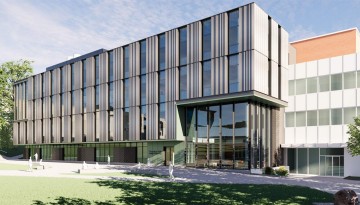
The $40 million, four-story addition will add 30,000 square feet and transform the stone and brick façade, originally built in 1951, into a contemporary glass and metallic exterior.
Students and lifelong learners are invited to explore a new interest, enhance their resume or strengthen their professional skills through Cornell’s Fall Part-Time Study Program, which runs Aug. 22 – Dec. 17, 2022. Registration for most students begins August 1.