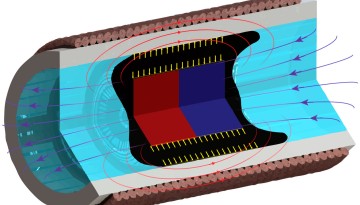
A collaboration between Cornell researchers and the U.S. Army Research Laboratory has leveraged hydrodynamic and magnetic forces to drive a rubbery, deformable pump that can provide soft robots with a circulatory system, in effect mimicking the biology of animals.
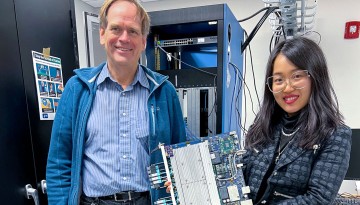
The grant from the National Science Foundation will support a team of Cornell physicists who smash matter into its component parts to learn about elementary particles and their interactions.
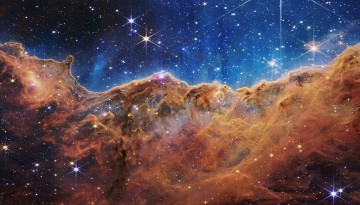
As NASA released its first images from the new James Webb Space Telescope – the next-generation telescope able to peer deeper into the cosmos – Cornell faculty marked the milestone.
Smart thermostats may be falling into a dumb trap. While these devices save homeowners money, Cornell engineers found they may be prompting unintentional energy spikes on the grid.
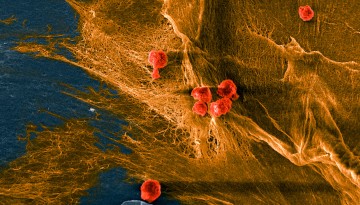
Producing biomaterials that match the performance of cartilage and tendons has been an elusive goal for scientists, but a new material created at Cornell demonstrates a promising new approach to mimicking natural tissue.
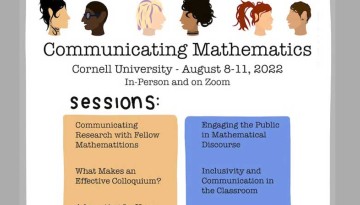
August 8-11, mathematics researchers and college-level teachers will discuss what it takes to communicate effectively among mathematicians, to students, and to the public.
The Autonomy and Mobility in Engineered and Natural Environments Workshop at Cornell Tech highlighted research from the smart cities and urban technology academic communities in Ithaca, NYC and beyond.