Our minds and the ways we tell stories are closely attuned, research shows, and scholar Fritz Breithaupt will explore how that connection works during a March visit as University Lecturer.
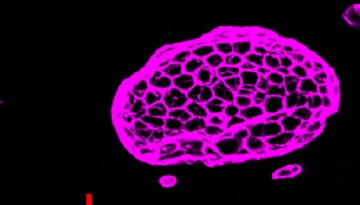
A tiny eukaryotic organism provided inspiration for modeling “traveling networks” – connected systems that move by rearranging their structure. Understanding these networks may help explain the behavior of certain biological systems and human organizations.
The Feb. 27 public lecture will be the third event in the Black History Month series organized and hosted by the Center for Racial Justice and Equitable Futures.
The Cornell University Scheinman Institute on Conflict Resolution's Liz Davis-Frost and Katrina Nobles discuss how focused listening promotes understanding and problem-solving on the Cornell Keynotes podcast.
A new mapping approach piloted by Cornell researchers could help policymakers identify where people live in extreme poverty and target resources more effectively.
In a new book, Isabel Perera explains why after deinstitutionalization, some affluent democracies failed to provide adequate services for the severely mental ill while others expanded care.