There’s no place like home — and even when state-by-state income tax disparities make it profitable to move, high-wage earners seem to agree, according to new Cornell-led research.
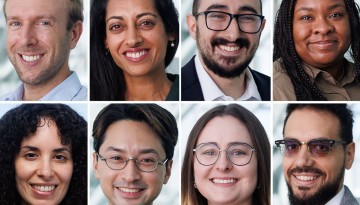
This year, 27 new faculty have joined the College of Arts & Sciences, enriching 17 departments and programs with their excellence in an impressive range of topics, including moral psychology, gravitational waves, Black contemporary art and more.
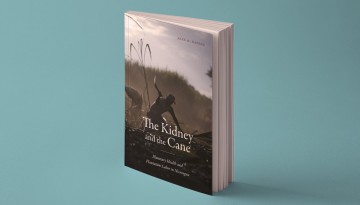
“What is happening to the kidneys of sugarcane workers is not a result of climate change. It is climate change": Anthropologist Alex Nading documents how environmental justice activists are addressing the epidemic.
At a multinational pharmaceutical company, employees who were nominated for, but not awarded, top performance ratings were at least 34% more likely to leave voluntarily.
The Purpose Science and Innovation Exchange, an initiative in the College of Human Ecology that launched in April to study the burgeoning field of purpose, has received a $3 million grant from the John Templeton Foundation.
In a new book, bioarcheologist Matthew Velasco argues that the reduction of head shape to a marker of ethnic identity has been a colonial invention, one that overlooked significant diversity in lived experience.
The way perceptual systems are organized in the brain depends on the way we perform actions with our hands, according to a new theory proposed by Cornell psychology scholars.