Cornell Atkinson is calling for proposals for faculty research related to the global COVID-19 pandemic. The center’s Rapid Response Fund will award seed grants of up to $10,000 for projects.
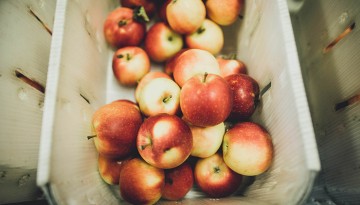
At the end of March, the Cornell Orchards started donating apples to the Ithaca and Dryden school districts, and will continue to do so over the next month. In all, it will donate approximately 26,000 apples.
A project led by Janis Whitlock, research scientist in the Bronfenbrenner Center for Translational Research, provides a space for people around the world to share stories about life in the age of COVID-19, snapshots that will help researchers understand how people coped during the pandemic.
Food industry professionals can learn how the novel coronavirus might affect their workers and their consumers, thanks to a series of virtual office hours held by staff at the Institute for Food Safety at Cornell.
Transdiagnostic processes, which are subtle ways that people think, act and cope, help explain why mental health problems become more common in girls as they reach puberty, according to new Cornell research.
Students who used immersive virtual reality did not learn significantly better than those who used two more traditional forms of learning, a new Cornell study has found.
People who tend to recognize similarities between people they know and people depicted in the media are more likely to believe common myths about sexual assault, according to Cornell research.
A new Cornell-designed algorithm inspired by mammal brains both sheds light on how the brain works and, applied to a computer chip, learns patterns better than existing machine learning models.