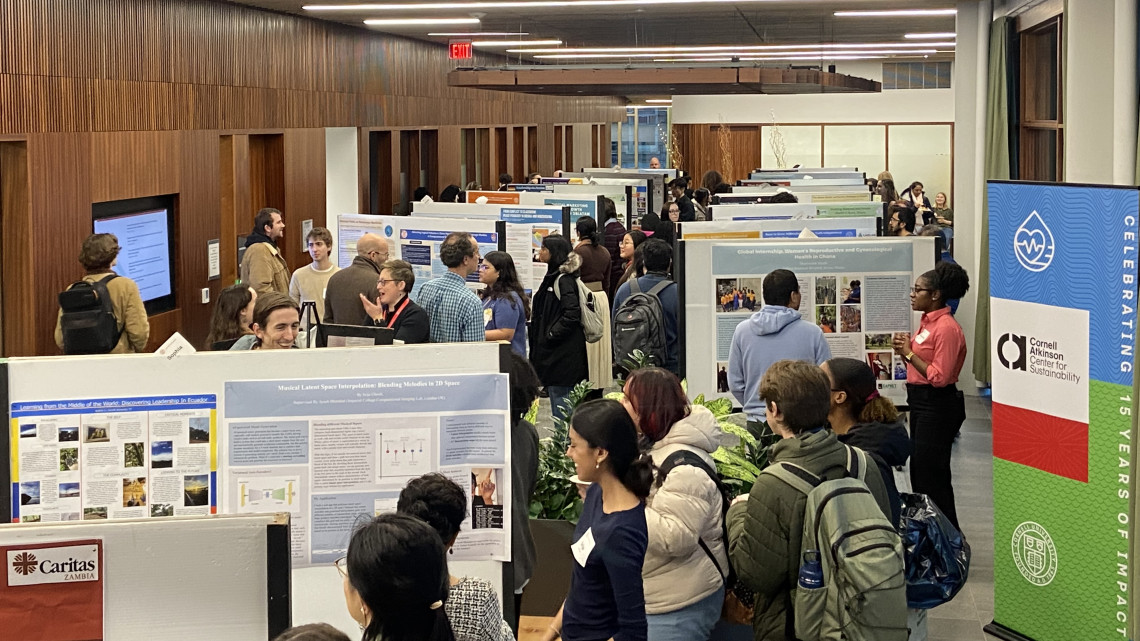
Laidlaw scholars present their research and leadership-in-action experiences at an annual showcase.
News directly from Cornell's colleges and centers
Laidlaw scholars build better world
By
For Desai Wang, BArch ’24, the Laidlaw Leadership and Research Program was a “training process” that laid the groundwork for her current work as a digital product designer and user research specialist.
The two-year Laidlaw scholars program supports undergraduates as they become globally minded researchers and ethical leaders. Administered by the Mario Einaudi Center for International Studies, the Laidlaw program at Cornell has trained 80 students since 2021. Applications opened this week for first- and second-year students interested in joining the next cohort.

Desai Wang '24 continued her research on urban design after completing the Laidlaw Scholars Program. On a Fulbright fellowship in Singapore, she interviewed residents about how to improve new signs at metro stations.
In their first summer, scholars pursue international research projects with mentorship from faculty members. Scholars pitch their own projects or work on existing faculty projects. They often join experienced research teams that include graduate students and postdoctoral fellows.
Wang worked with Timur Doğan, associate professor of architecture, on a project about mitigating the effects of extreme heat in cities like New York City and Los Angeles. The experience led her to pursue a Fulbright U.S. Student research fellowship in Singapore after graduation.
“Laidlaw set me up very well for Fulbright,” Wang said. “It helped me build relationships with professors and work toward solving hard problems.”

Wang (right) with fellow product designers at Datadog.
In her position at Datadog in New York City, Wang talks to product users and incorporates their feedback to build better digital tools—like her Laidlaw experience, work that requires “forging my own path.”
“You try something,” she said, “and you don’t know if it’s going to work. Through trial and error, you course correct.”
In their second summer, Laidlaw scholars engage in a leadership-in-action experience of their own design or get paired with international organizations. They spend six weeks collaborating with international communities on projects designed for sustainable, long-term change.
Past scholars have contributed to sustainable development efforts in Tanzania, helped connect vulnerable people in Greece to social service networks, volunteered with nonprofits in Mexico to support rural and Indigenous women and more.
“Working abroad is essentially a tutorial in leadership,” said Beth Lyon, one of two new faculty fellows Cornell has added to its Laidlaw program this year.
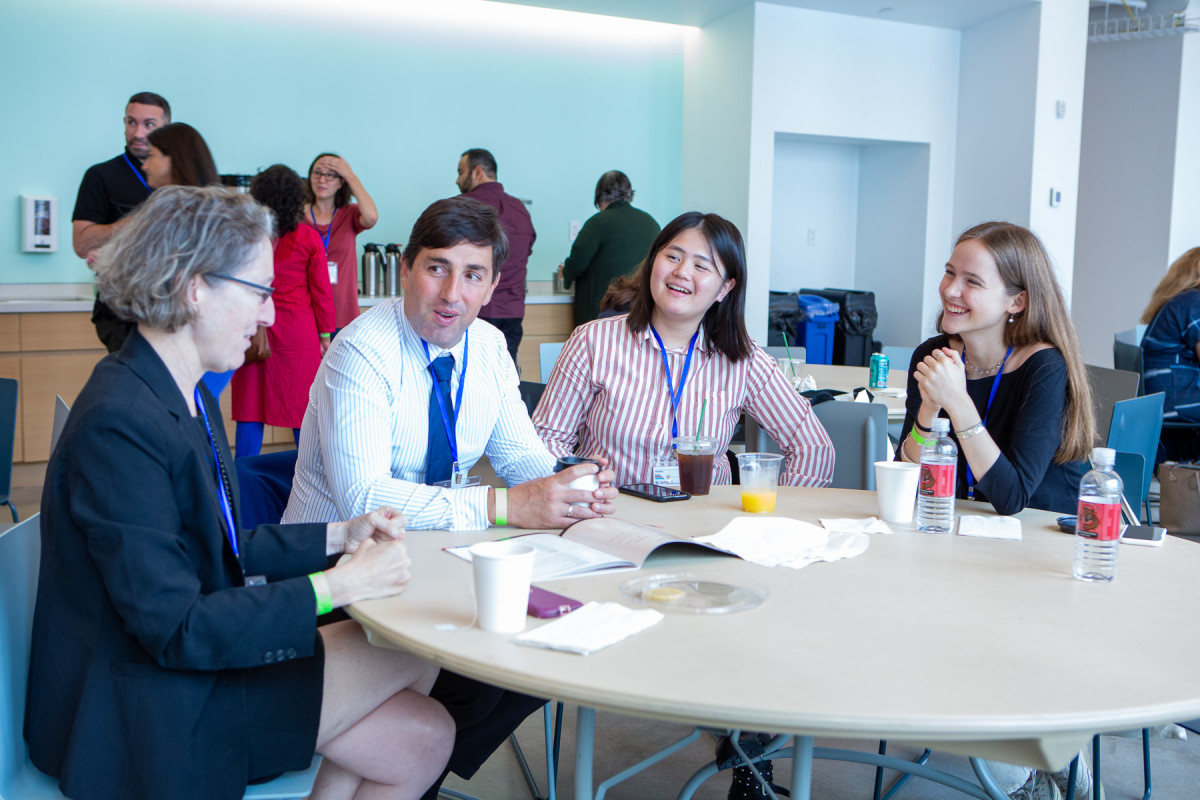
Beth Lyon (left) with visiting scholar Sergio García-Magariño and Laidlaw scholars Gaveal Fan '25 and McKenzie Carrier '24. They organized a conference at Cornell Tech as part of Lyon's xenophobia meter project.
“Our students are goal-oriented, with a predisposition to lead collaboratively as they learn, listen and set about accomplishing projects in completely unfamiliar environments,” Lyon said. “The international placements allow them to test these skills, coming away with justifiable confidence in their ability to work in a team and lead when needed.”
A clinical professor at Cornell Law School, Lyon has supervised several Laidlaw research projects in past summers. She is joined by Johannes Haushofer, professor of economics and public policy in the Brooks School of Public Policy.
In addition to bringing their own areas of expertise and mentorship, the faculty fellows will connect Laidlaw scholars with leadership and research opportunities locally and globally. For Laidlaw scholars at Cornell and around the world, the program’s hands-on experiences and international networking provide lasting benefits that reach far beyond campus.
“I hope to help scholars develop their research interests and think about how their work might be useful beyond the university,” said Haushofer.
“To me, leadership includes listening carefully, being willing to revise your views and taking responsibility for the effects of your decisions on others,” he said. “Research offers useful opportunities to practice those habits, especially when working with people whose experiences differ from your own.”
Throughout their two years, Laidlaw scholars receive leadership training emphasizing values like purpose, empathy, resilience and humility to guide ethical decision-making.
The Laidlaw network includes programs at 22 other universities in the UK, US and beyond. Every year, scholars from around the globe attend an in-person conference where they present their work, meet fellow scholars and participate in lectures and workshops.
Students interested in Laidlaw can attend an information session on Oct. 20, meet the current scholars at the Oct. 28 International Research Showcase or contact the Einaudi Center's Laidlaw coordinator.
Media Contact
Get Cornell news delivered right to your inbox.
Subscribe