Four on faculty to receive DOE early-career grants
By Tom Fleischman, Cornell Chronicle
Four Cornell faculty members are among 99 researchers across the U.S. who have been awarded grants by the U.S. Department of Energy as part of its Office of Science Early Career Research Program.
Debanjan Chowdhury, associate professor of physics, and Jennet Dickinson, assistant professor of physics, in the College of Arts and Sciences; Matthew Reid, associate professor of civil and environmental engineering in the Cornell David A. Duffield College of Engineering; and Yu Zhong, assistant professor of materials science and engineering (Duffield Engineering) – will each receive at least $875,000 over five years to support their scientific endeavors.
“The vision, creativity and effort of early-career faculty drive innovation in the basic science enterprise. The Department of Energy’s Office of Science is dedicated to supporting these promising investigators,” Harriet Kung, the DOE’s deputy director of science programs for the Office of Science, said in a statement. “These awards allow them to pursue new ideas and harness the resources of the user facilities to increase the potential for breakthrough new discoveries.”

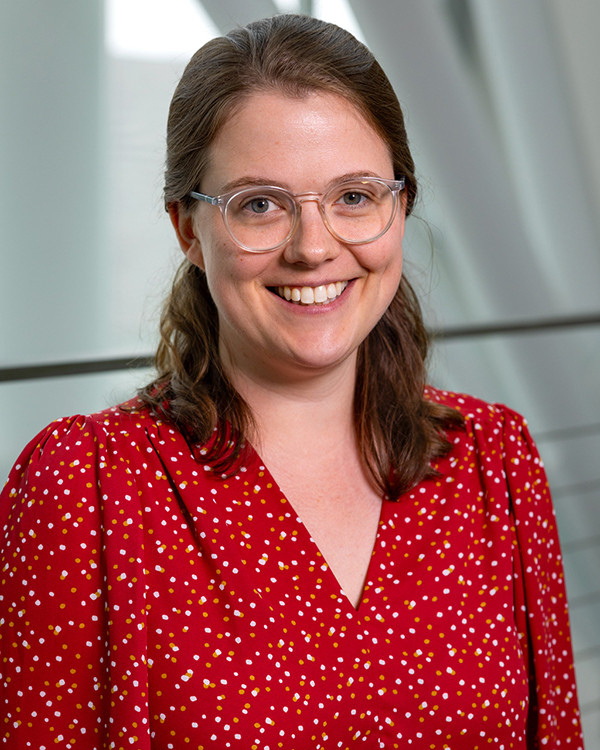
Debanjan Chowdhury
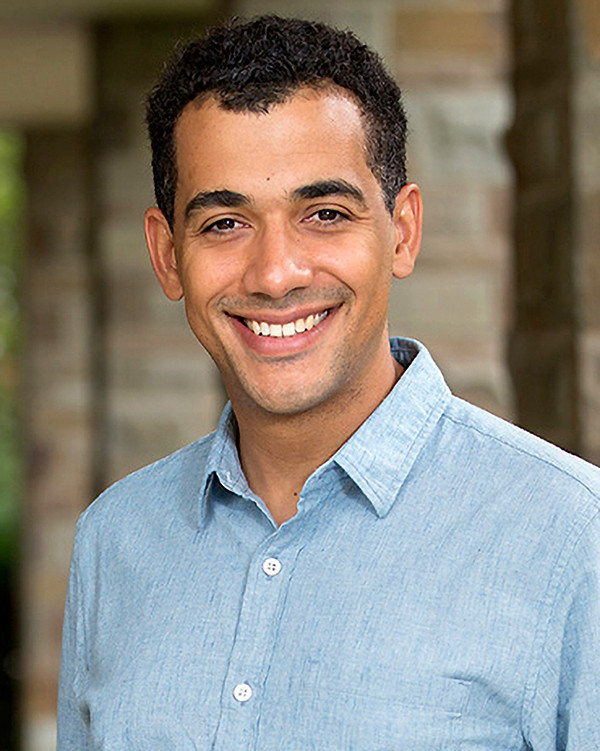
Jennet Dickinson
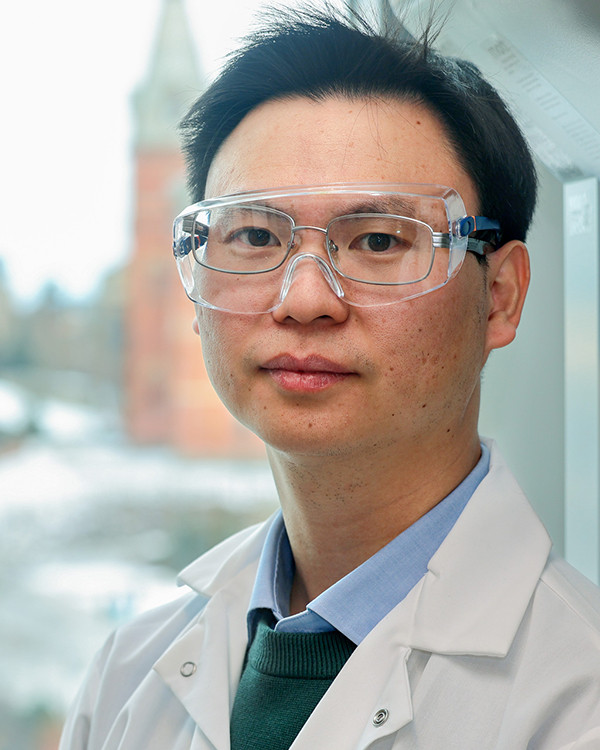
Matthew Reid
Yu Zhong
Chowdhury’s research involves programmable noisy intermediate-scale quantum (NISQ) devices, which allow for studying questions of both fundamental and practical importance in quantum materials research. While practical quantum applications typically require stable quantum bits with long coherence times, this research proposes innovative programmable algorithms that can harness the power of imperfect quantum simulators to tackle complex materials problems.
The focus will be on studying models of quantum materials where the combined effects of competing interactions, strong correlations and disorder create novel forms of quantum entanglement that go beyond conventional theoretical frameworks. This work aims to expand boundaries in the interconnected fields of quantum matter and information, establishing novel research directions that cross traditional disciplines and advance quantum materials research.
Dickinson will use her award to further her research on the Higgs boson, the particle responsible for electroweak symmetry breaking. The Standard Model of particle physics predicts that the Higgs boson is unique in this role, and that electroweak symmetry is restored at high energies.
Using the large dataset collected by the Compact Muon Solenoid experiment at the Large Hadron Collider in Switzerland, the research will incorporate artificial-intelligence and machine-learning algorithms to study this high-energy regime, measuring Higgs boson production and subsequent decays of the Higgs to a pair of bottom quarks that yield hadronic resonances at high transverse momentum. This project will develop custom intelligent readout electronics that contain compact and novel AI and machine learning algorithms for on-detector data analysis.
Reid will study anoxic microsites that develop within organic-rich soil aggregates – “hot spots” for a wide range of environmentally-relevant biogeochemical processes, including denitrification and the production and consumption of nitrous oxide along subsurface hydrological flowpaths. The funded work will study the counterintuitive role that molecular oxygen can play as an essential and often limiting factor in the development of anaerobic microenvironments within soil aggregates.
The scientific goal of this project is to build a predictive model framework that describes the role of molecular oxygen in “unlocking” recalcitrant organic carbon in organic-rich soil aggregates, and to use this framework to explain spatiotemporal variability in coupled nitrogen and carbon dynamics in soils at terrestrial-aquatic interfaces. Mathematical modeling will be used to connect variations in water chemistry at the flowpath scale to the development of microscale redox gradients within soil aggregates.
Zhong’s award will further his research on the separation of rare earth elements, which are used in electronics devices, magnets and renewable energy technology. Separating rare earth elements from each other is a long-standing scientific challenge due to their similar chemical properties. Current separation strategies typically rely on solvent extraction and ion exchange chromatography, and struggle to achieve selective separation due to their similar oxidation states and ionic radii.
This project aims to address this separation science need through the design of structurally tailored helical polymers that recognize and selectively bind to the elements’ ions. The rigid, helical and ladder-like polymer is hypothesized to form conformationally constrained cavities that can be tailored to bind to specific ions based on rigidity, cavity shape and assembly kinetics.
Media Contact
Get Cornell news delivered right to your inbox.
Subscribe