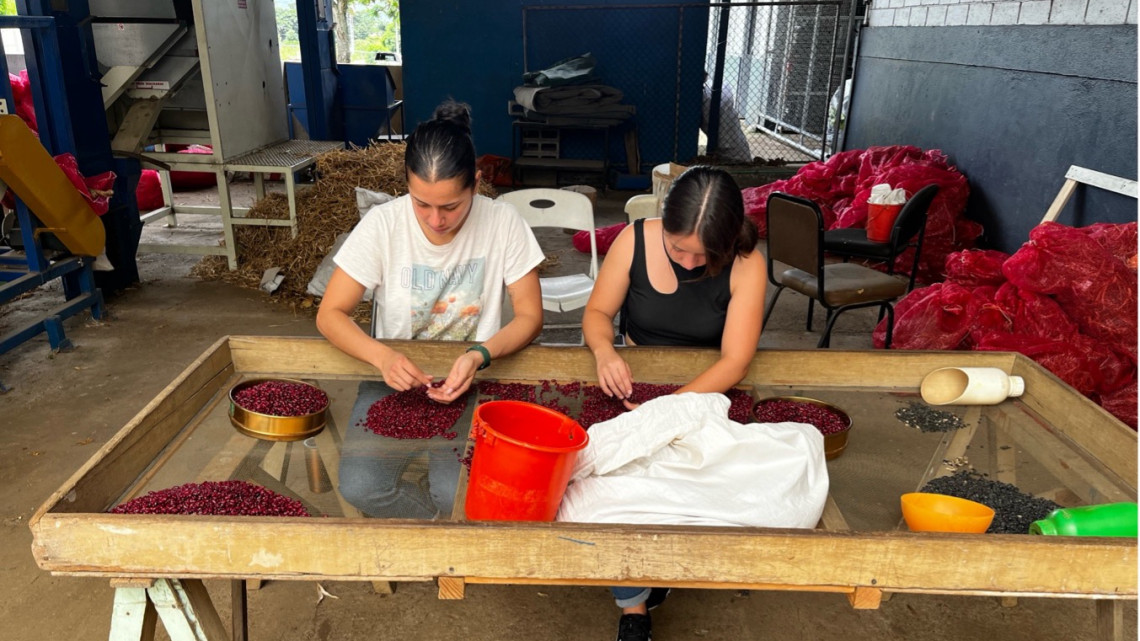
Yoselyn Hernández Chaves (left), master's student in applied economics and management, studied consumer and industry preferences on red beans in Costa Rica last summer.
News directly from Cornell's colleges and centers
Einaudi travel grants send grad students abroad
By
Eighty-three graduate students traveled internationally for fieldwork last summer with the support of research travel grants from the Einaudi Center for International Studies. Their work sent them to every continent except Antarctica and Australia. Applications are open until March 6 for graduate students seeking support for summer 2026.
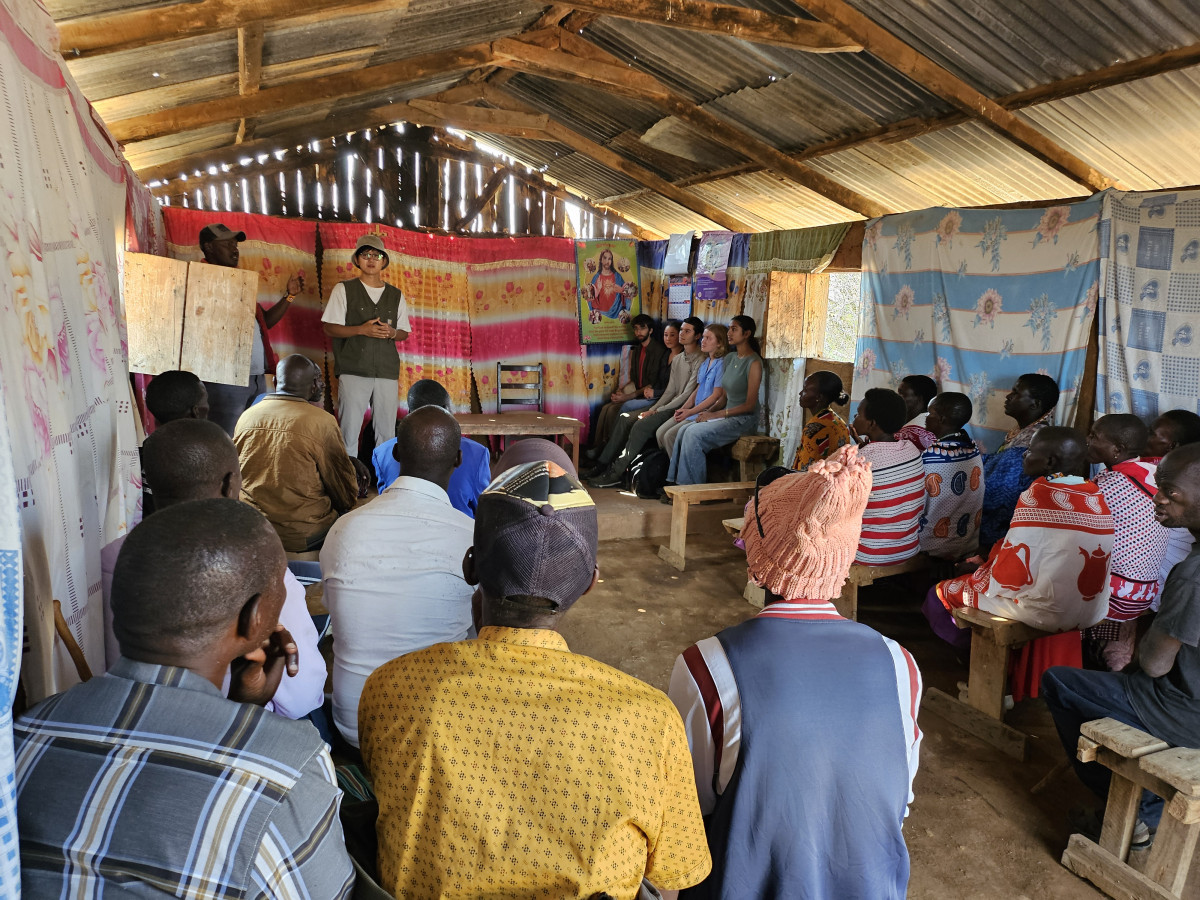
Shin spoke with stakeholders across several steps of the carbon market process – smallholder farmers, NGOs, research organizations and factories.
Seongmin Shin, global development PhD student in the College of Agriculture and Life Sciences, studied biochar carbon markets in Kenya. Biochar is a sustainable, carbon-rich form of charcoal often used to fertilize soil. Kenyan companies can purchase government “credits” to account for their greenhouse gas emissions that subsidize biochar production – with the national goal of net neutral emissions.
Shin’s work included interviews with stakeholders across several steps of the carbon market process – smallholder farmers, NGOs, research organizations and factories – to find out who is gaining from the carbon markets.
“Potential benefits for farmers can include improved soil fertility, higher and more stable yields and greater resilience to climate shocks,” he said. “However, I find that financial and decision-making benefits often accrue more to project developers and intermediaries, while smallholder biochar producers tend to receive more limited and conditional returns.”
Shin first got interested in this work when he worked as a reforestation officer with the government in his home country of South Korea. He planted trees in 10 countries around the world before coming to Cornell in 2023 in search of deeper answers about how to reduce net carbon emissions.
“Meeting people is the greatest part of doing international fieldwork,” said Shin. “I got new insight and perspective from local people, and I had the opportunity to represent their voices.” One local coordinator is included as a coauthor on an upcoming paper Shin is writing.
“I really appreciated the support of the Einaudi Center that allowed me to stay in Kenya for two months. Without Einaudi, I couldn’t have stayed as long as I needed to.”
Yoselyn Hernández Chaves followed a similar path to Cornell. Before starting her master’s degree in the Dyson School of Applied Economics and Management, Hernández Chaves worked at the National Institute of Innovation and Transfer in Agricultural Technology in her native Costa Rica. She contributed to projects on the socioeconomic impacts of bean breeding.
“Beans are a crop of great importance in Costa Rica – not only because of their nutritional and economic value,” she said, “but also due to their role in food security.”
Current industry standards assume that consumers prefer and are more likely to purchase light red beans – a feature associated with freshness. As a result, producers often reject bean varieties with “high agronomic or productive potential simply because they do not meet industry-imposed visual standards,” she explained.
Her Einaudi-supported summer field work in Costa Rica included surveys and interviews with consumers and stakeholders in the bean industry. What bean preferences exist in the market? And how can producers and plant breeders use this information to create new, sustainable red beans for the future?
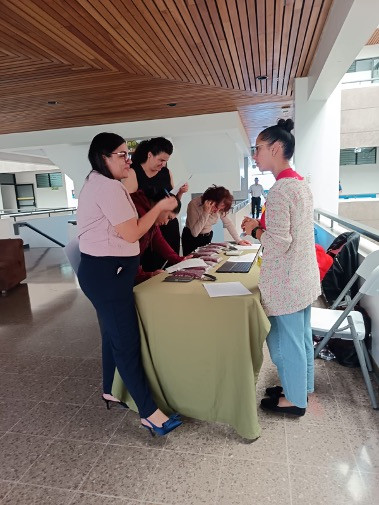
Consumers select their preferred bean variety during the willingness-to-pay activity Hernández Chaves held at the Ministry of Agriculture and Livestock in San José.
“Willingness-to-pay” activities are one way she collected this data from consumers. Hernández Chaves and her team prepared four types of beans for participants to evaluate. Each type differed in color and brightness. After evaluating all the options, consumers proposed fair prices that they would be willing to pay for each.
While participants considered color to be a relevant attribute, their purchasing decisions were more influenced by price and brand.
“Fieldwork creates space for meaningful engagement with people, allowing us to listen to diverse perspectives and gain a deeper understanding of local realities,” she said. “Often, it is not about teaching, but about learning – the communities we work with have invaluable knowledge and experiences that enrich our research.”
Einaudi travel grant applications are open until March 6 for graduate students seeking support for next summer.
Megan DeMint is new media manager for Global Cornell.
Media Contact
Get Cornell news delivered right to your inbox.
Subscribe