Daniel Gold, professor of Asian studies emeritus, dies at 78
By Kate Blackwood
Daniel Gold, a professor of Asian studies emeritus in the College of Arts and Sciences, died on Feb. 16 in Ithaca. He was 78.
Gold taught at Cornell for 35 years, from his arrival in 1986 to retirement in 2021. He had broad interests in South Asian religion and culture, with research specializations in old Hindi poetry, early modern North Indian devotional cultures, and contemporary religious life. He served as chair of the Department of Asian Studies and as director of the South Asia Program in the Mario Einaudi Center for International Studies.
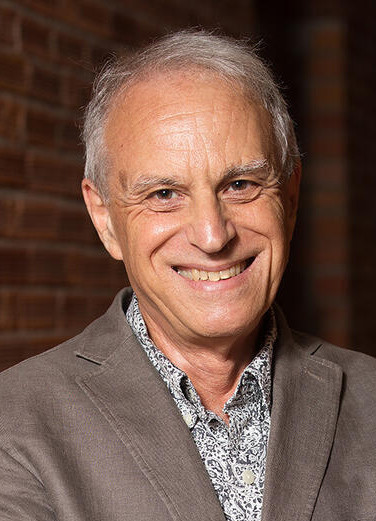
Daniel Gold
“Dan Gold’s rigorous and creative life of the mind manifested in rich intellectual work as well as contemplative practice,” said Anne Blackburn, the Old Dominion Foundation Professor in the Humanities (A&S). “These forms of deep-seeing and creativity were interwoven, resulting in powerful academic work and unusually humane interactions with students and colleagues. We will miss him greatly.”
Gold contributed four books to the field, including “Provincial Hinduism: Religion and Community in Gwalior City,” and “Aesthetics and Analysis in Writing on Religion: Modern Fascinations.”
Daniel Gold was born May 24, 1947 in Newark and grew up in Los Angeles. He earned a bachelor’s degree in Slavic languages and Latin from the University of California, Berkeley, in 1968. After graduation, he joined the Peace Corps, training teachers of English in India, an experience which led him to pursue graduate study at the University of Chicago Divinity School, where he received his Ph.D. in 1982.
He taught at Vassar College and Oberlin College and was a Mellon Fellow for one year at Stanford University before joining the Department of Asian Studies at Cornell, where he was promoted to full professor in 1997.
For Gold, personal devotion and scholarly pursuits were interconnected.
"I think of Dan Gold as that rare example of a person who adhered to the same set of principles across all the spheres of his activities and commitments,” said Brett de Bary, professor of Asian studies emerita. “Subtlety, rigor, tolerance and self-discipline were not only topics of his prolific research on Indian religions – they also characterized his presence as a departmental colleague, as well as his personal life, in which he maintained the meditation practices he learned in India through its final months.”
Gold discovered meditation while in the Peace Corps, and continued for the rest of his life. He brought his knowledge and practice to Cornell through one of the popular courses he taught, “Meditation in Indian Culture.”
“Dan’s keen insights into devotional practices made his scholarship a rare addition to the field of the study of holy personages in India,” said Jane-Marie Law, associate professor of religious studies and Asian studies. “One of Dan’s finest qualities was his unwavering kindness and his ability to never take the drama of academia too seriously, allowing dust to settle where it may. He was always generous with his praise for his younger colleagues and their talents.”
Mid-career, Gold added film as a scholarly outlet, producing the documentaries set in Gwalior, “Living Above Hippopotamus Street: Religion and Community” (2006) and “Being Sindhi in Central India: Religion, Community, Identity” (2007).
Natasha Raheja, assistant professor of anthropology, discovered when she was an undergraduate Gold’s films on religion and devotion in a South Asian refugee community.
“I wrote to him out of the blue and he generously mailed me a DVD – an act of quiet encouragement that helped spark the awareness that communities and questions like my own belonged in the humanities and could shape a life’s work,” Raheja said. “I am grateful that our paths overlapped at the beginning of my career and at the close of his; his spirit of devotion, his embrace of film in the academy and his thoughtful presence remain a lasting gift.”
In addition to his books and films, Gold contributed to the field many book chapters and articles, continuing to research and publish into the last months of his life. He was twice a Society for the Humanities fellow at Cornell. He held fellowships from the Fulbright Foundation, the American Institute of India Studies and the American Council of Learned Societies. He traveled to India frequently for fieldwork, often with his wife, Ann Grodzins Gold, a professor of anthropology and religion at Syracuse University.
Gold is survived by his wife, two sons and one grandson.
Kate Blackwood is a writer for the College of Arts and Sciences.
Media Contact
Get Cornell news delivered right to your inbox.
Subscribe