Why we’re skeptical of the emotions we see on our screens
By James Dean, Cornell Chronicle
If you’ve poured your heart out on social media about a political issue, it might have felt cathartic – but likely was not persuasive, Cornell research finds.
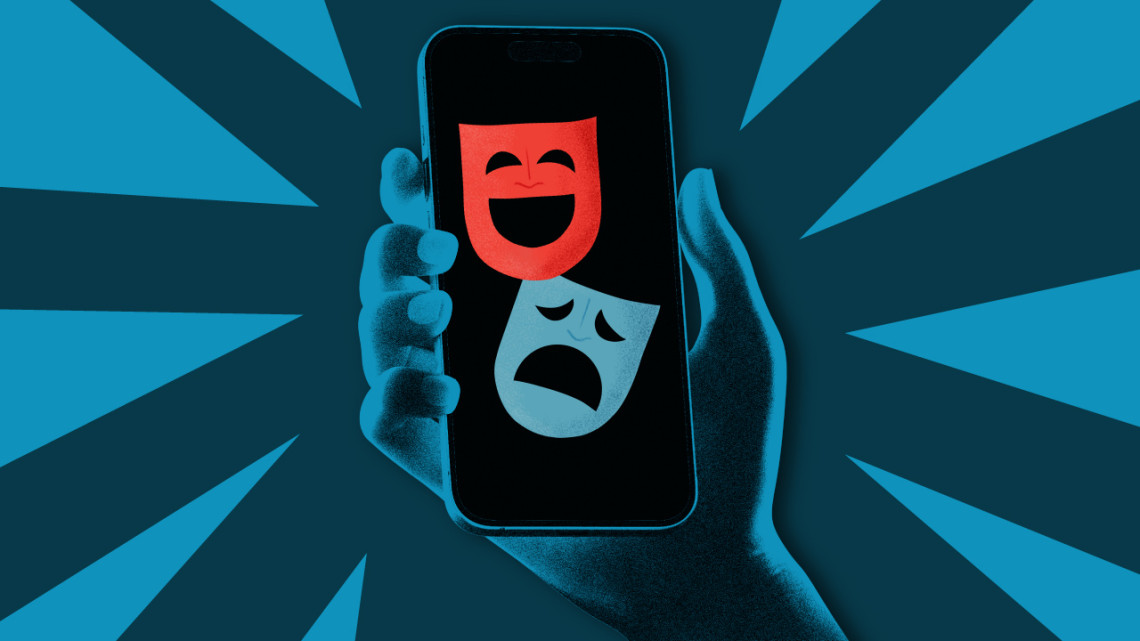
Americans are skeptical of emotional comments they see in their news and social media feeds, political scientist Talbot Andrews and co-authors report in a new monograph, “Emotions on Our Screens,” part of the Cambridge Elements in Politics and Communication series. Over six experiments involving nearly 6,400 participants, viewers questioned the sincerity of fear or sadness people expressed about climate change in simulated news reports, text messages and TikTok posts. Such comments were rated as less authentic and appropriate than more neutral ones – even when the observer agreed politically with the speaker.
“Making people emotional is a great way to motivate them to care about an issue,” said Andrews, assistant professor of government in the College of Arts and Sciences, whose research focuses on climate policy. “But expressing your own emotions is not necessarily going to change others’ minds about that issue.”
Andrews will give a public talk about the research involving scholars from the fields of political science, psychology and communication at 3 p.m. April 6, part of the Cornell Atkinson Center for Sustainability's Perspectives on the Climate Change Challenge seminar series. She discussed the collaboration with the Chronicle.
Question: What got you interested in how we perceive the emotions on our screens?
Answer: Emotions are so important. People generally don’t get involved in issues they don’t feel strongly about. With an issue like climate change, we need to inspire hope. Anger is another emotion that can motivate people to vote. Political scientists have extensively researched how our own emotions can change how we engage with politics. But we’ve largely neglected how we’re affected by seeing other people’s emotions, which we’re exposed to now more than ever.
Q: How so?
A: Changes in the media environment have given us unprecedented access to the expressed emotions of others. Through the internet and social media, we’re far more connected to strangers, and those strangers are often very emotional about politics. Years ago, we might have occasionally seen someone being emotional in a newspaper article or TV news story, or had friends or family text something emotional about politics. Now it feels almost constant.
Q: Are we moved by all these emotions we’re seeing online?
A: The answer depends on the context. Here we focused on the platform through which you encounter the emotion, like if it’s in the news or someone’s Instagram. In the current media environment, unfortunately, we don’t always take others’ emotions especially seriously.
Q: Are some platforms better suited to expressing emotions?
A: We thought people might see emotions as more authentic in news articles, where journalists act as gatekeepers, compared to social media, where people have editorial control before sharing anything. Surprisingly, we didn’t find many differences. Skepticism was stronger when viewers saw a sad face, rather than just text, in simulated TikTok screenshots. People thought that seemed especially inappropriate.
Q: Are we less skeptical about emotion when we agree on the issue?
A: People are skeptical when they disagree with social media posts at all, but the effect of emotional expression is pretty similar either way. We saw the same pattern in an experiment featuring posts from a climate skeptic. People tended to see the emotion as manipulative. Like, “I think you’re crying crocodile tears to make me feel bad about this, and I see through that ploy.”
Q: Why did you make climate change the issue people get emotional about?
A: People feel increasingly emotional about climate change. As of 2023, 66% of Americans were at least “somewhat” worried about climate change, and 55% believed they’d already experienced some of its negative effects. The American Psychological Association has officially defined “ecoanxiety,” a chronic fear of ecological and environmental disaster. And on my own social media feeds, at least, I see people expressing these emotions all the time.
Q: Did emotional quotes or posts generate backlash?
A: It seems localized to the person who’s being emotional. It’s more that people will be skeptical of your sincerity in posting, but no one was less worried about climate change because they saw someone get emotional about it. Study participants didn’t punish emotional content, just viewed it as less appropriate and authentic than more stoic expressions.
Q: Has the research changed how you process the emotions on your screens?
A: I often encounter emotional posts online about climate change. It’s an issue my co-authors and I care about so deeply, but I also am not always moved by these emotional posts and wondered why. Through this research I really learned about our skepticism for these mediated contexts. When we aren’t interacting face to face on these important issues, we’re skeptical of what other people are being emotional about and why. One positive aspect to this is that observers aren’t just accepting any information coming at them. They’re looking for cues about authenticity.
Q: Should people refrain from being emotional online?
A: Not at all! Emotional expression can serve an important role, helping people find a community that cares about their issue. Even if it doesn’t achieve any influential goal – persuading others or building your social media clout – expressing emotions often makes people feel better. The takeaway is not that people should keep their feelings to themselves, but that such expression won’t always be taken at face value.
Media Contact
Get Cornell news delivered right to your inbox.
Subscribe